
Last updated September 10, 2026
Full 25-point door and opener safety check with every visit - springs, cables, rollers, tracks, and your LiftMaster or Chamberlain opener included
You get a price before we start. It does not change when the truck arrives.
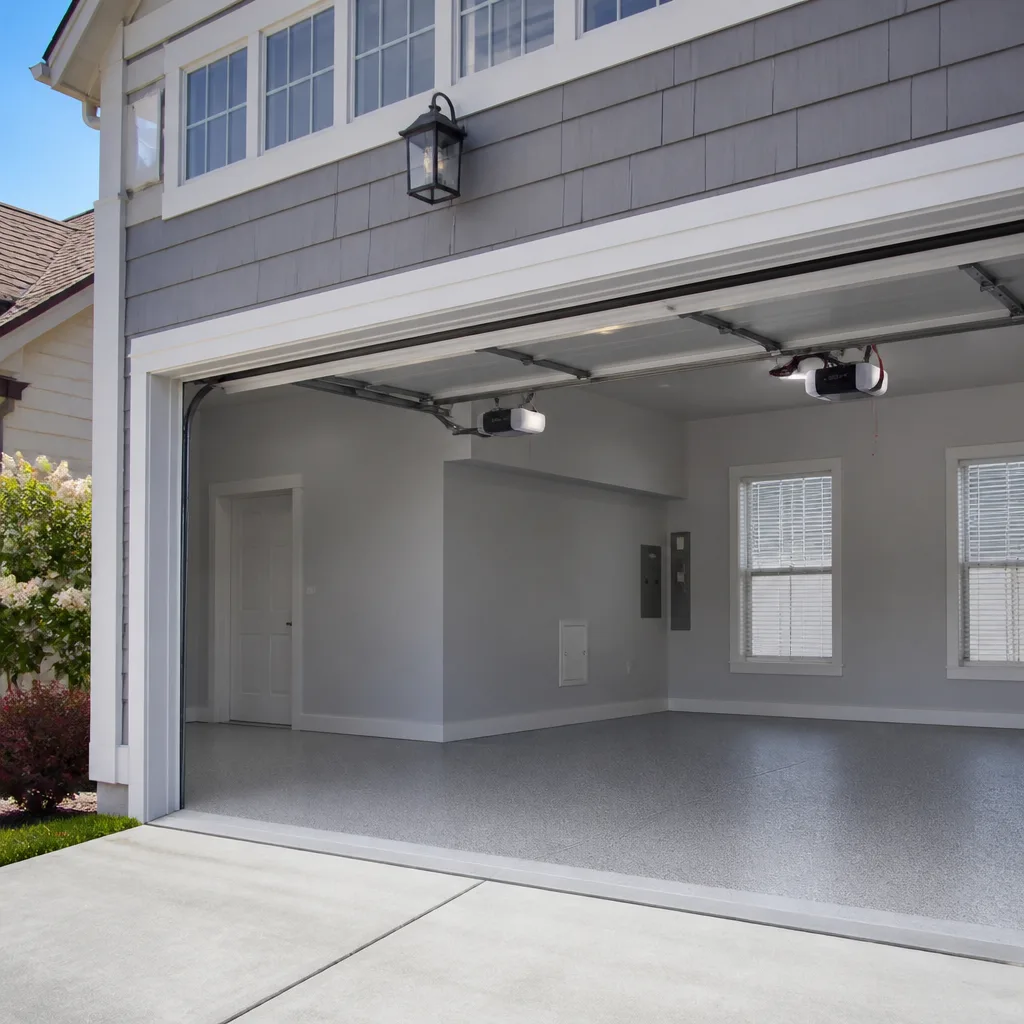
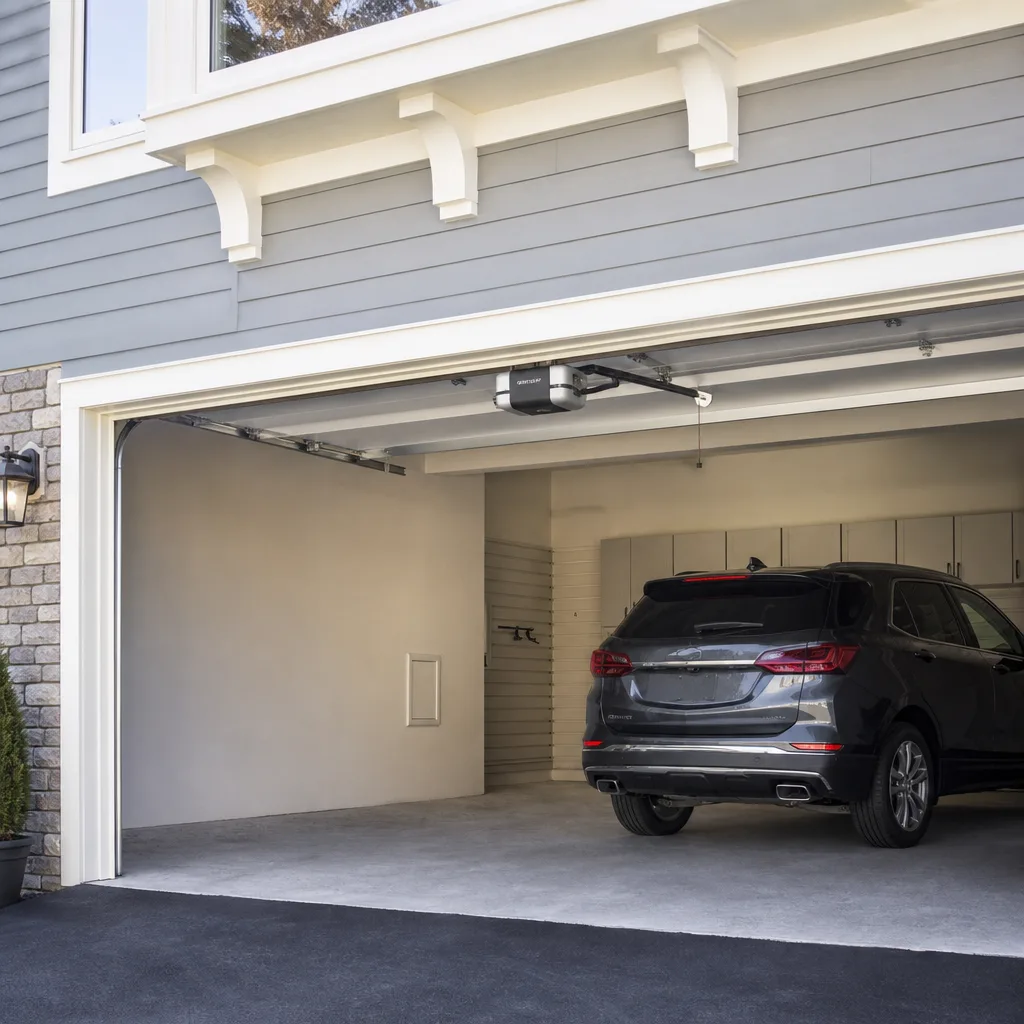
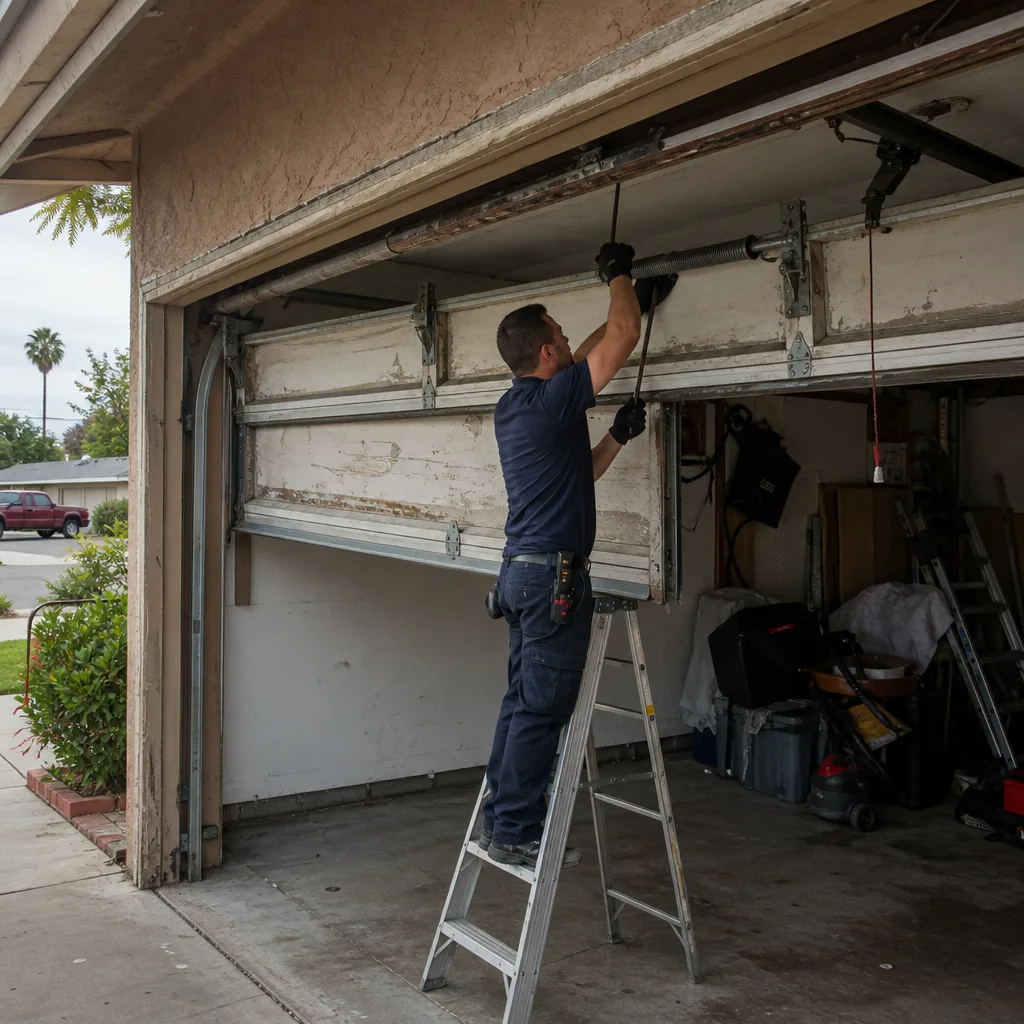 Before
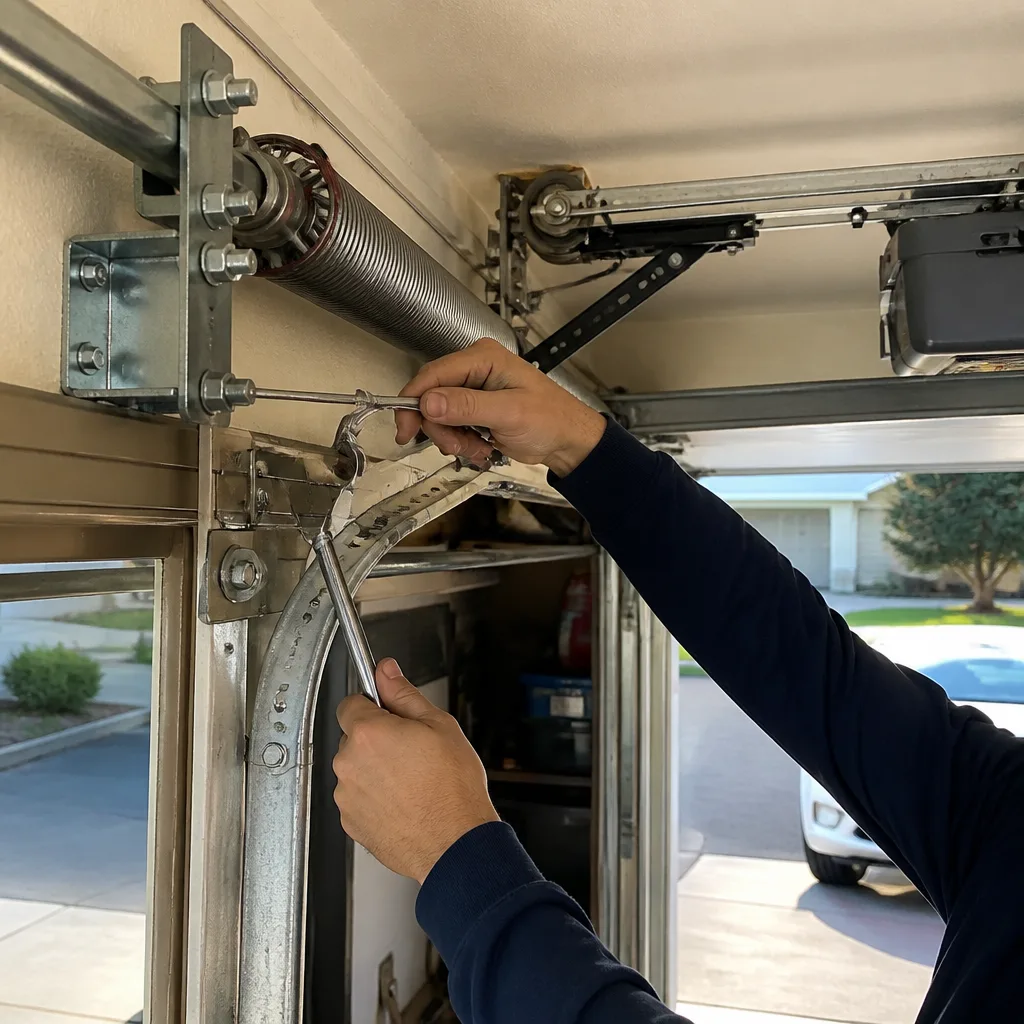 After
After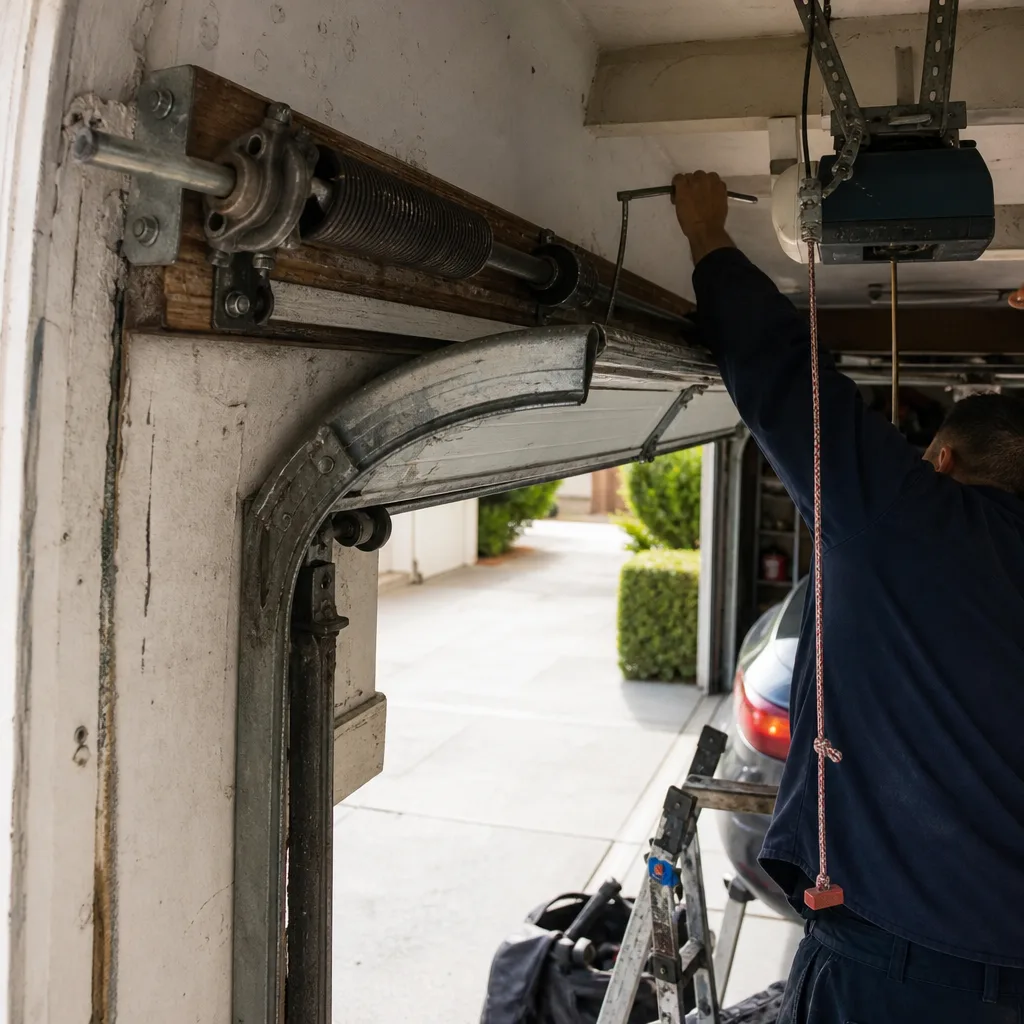 Before
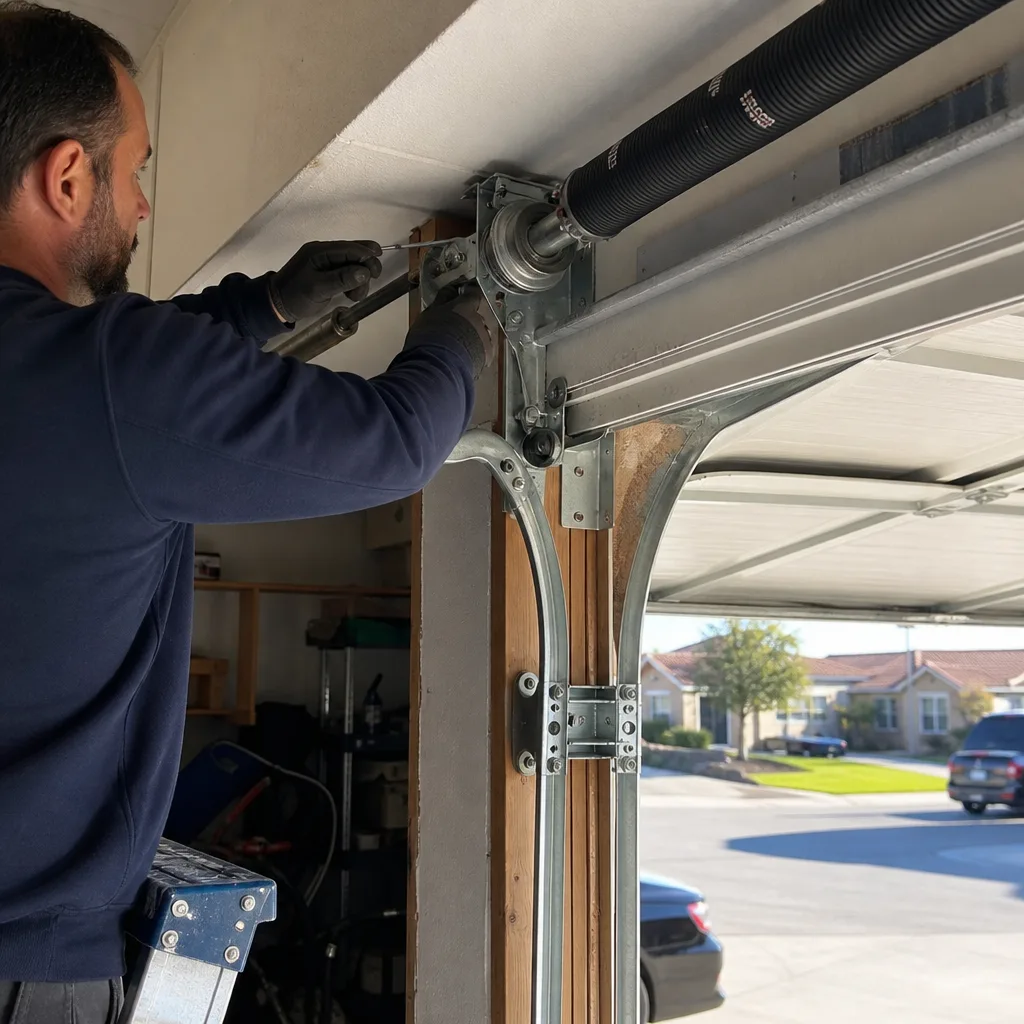 After
After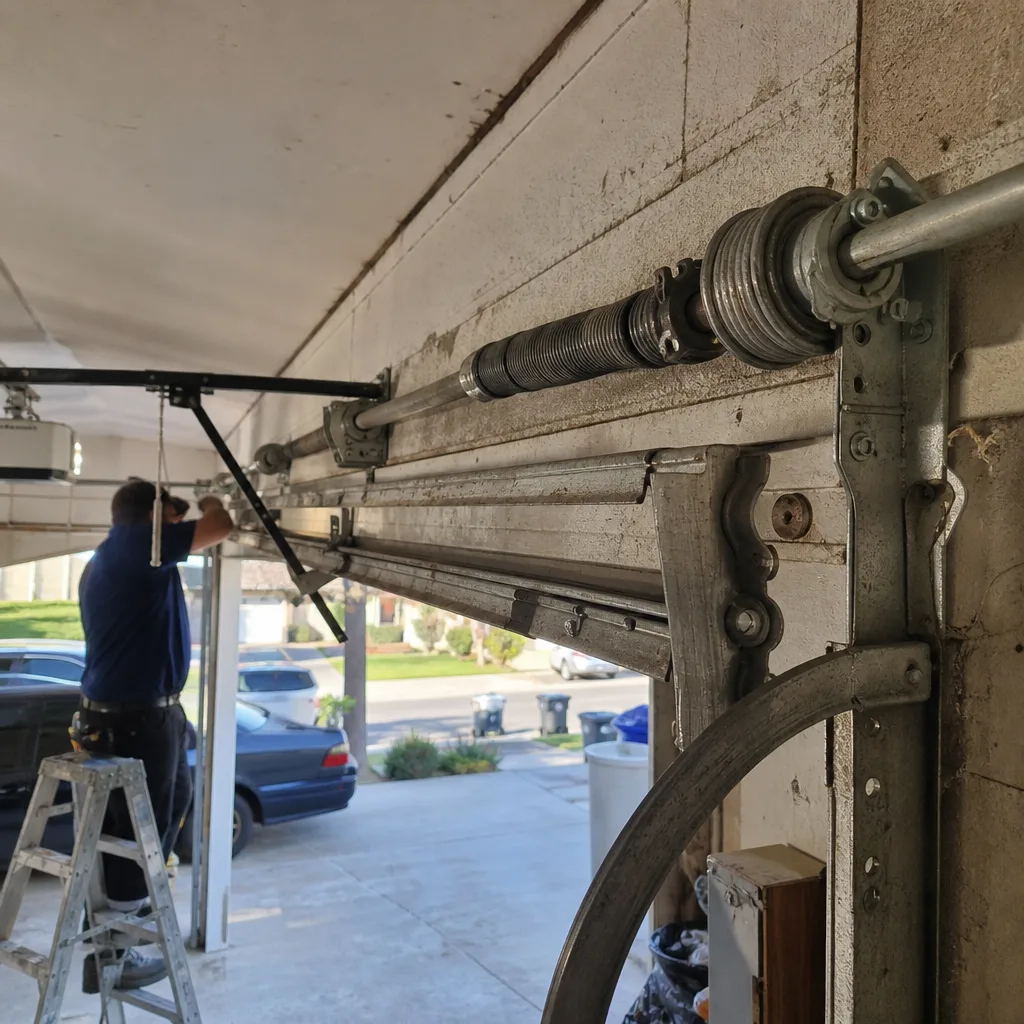 Before
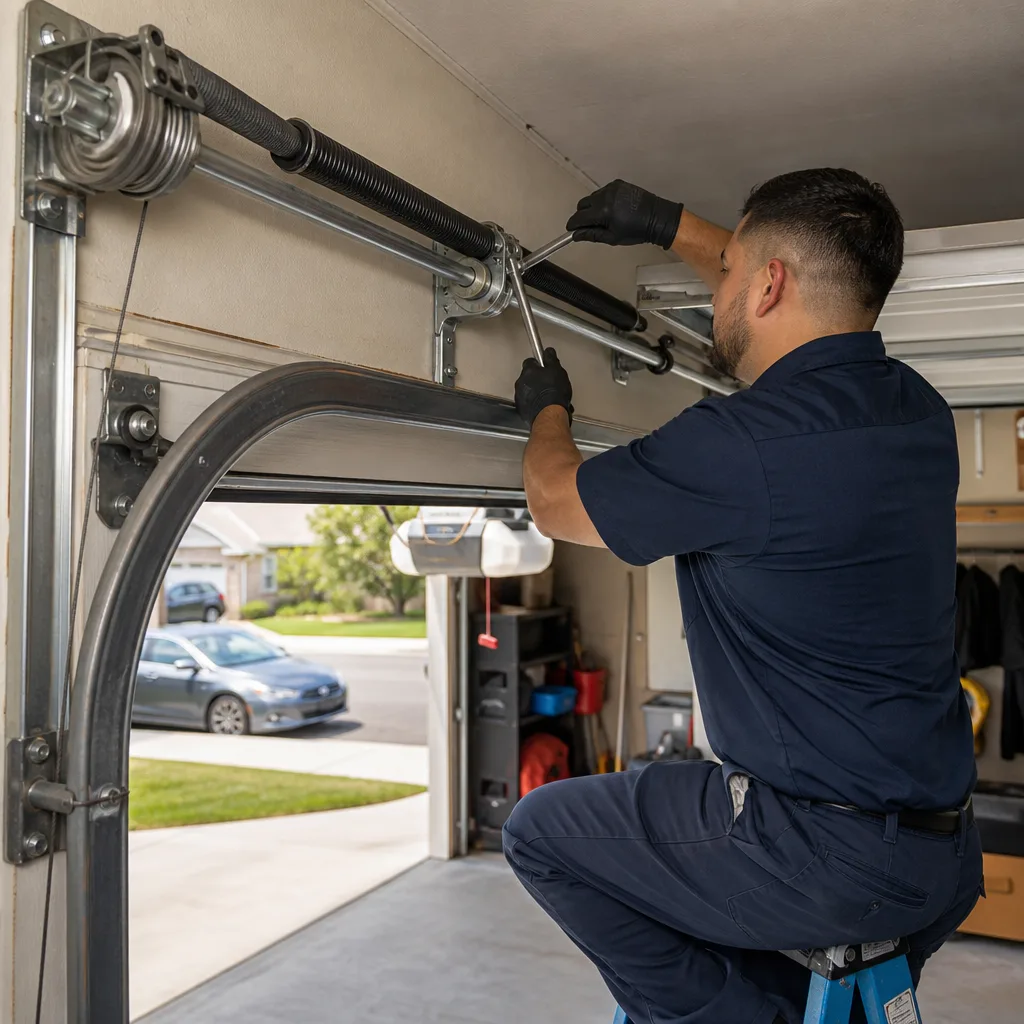 After
AfterHow to Hire a Garage Door Contractor in Chula Vista: A Step-by-Step Guide
California’s CSLB database shows dozens of active garage door contractors licensed in San Diego County. It also shows which ones have disciplinary actions, bond lapses, and expired workers’ comp - information most homeowners never check because no one told them to look. In Chula Vista, where coastal salt air accelerates spring corrosion and older Eastlake and Rancho del Rey homes still run original hardware, the wrong hire doesn’t just cost money. It costs a second contractor to fix the first one’s work. This guide gives you a repeatable vetting process, not a list of vague questions to ask, and complements our Complete Guide to Garage Door in Chula Vista.
Quick Answer
To hire a garage door contractor in Chula Vista, verify an active C-61/D28 license through the CSLB, confirm active general liability and workers’ comp insurance directly with the carrier, demand a written quote with separated labor, parts, disposal, and warranty line items, and get a workmanship guarantee in writing before any work begins. Skip anyone who pressures you for an immediate decision or quotes only by phone.
Table of Contents
- Step 1: Verify the CSLB License (And Why a Handyman Card Is Not Enough)
- Step 2: Confirm Insurance Is Active, Not Just “On File”
- Step 3: Read the Quote Like a Contract
- Step 4: Spot the Three Operator Types to Avoid in Chula Vista
- Step 5: Demand These Two Warranty Clauses in Writing
- What Chula Vista’s Climate and Codes Mean for Your Job
- Common Mistakes to Avoid
- When to Call a Professional
- Frequently Asked Questions
- The Bottom Line
Step 1: Verify the CSLB License (And Why a Handyman Card Is Not Enough)
Every legitimate garage door contractor in California must carry a C-61/D28 classification from the Contractors State License Board. This is not optional, and it is not the same as a general handyman registration.
Here is the difference that matters. A C-61/D28 holder has passed a trade-specific exam, carries a $25,000 contractor bond, and is subject to CSLB discipline. A handyman operating under the $500-per-job exemption has none of these protections. For garage door work - where a 150-pound sectional door under spring tension can cause serious injury - that distinction is not technical. It is financial and physical protection for you.
To verify a license:
- Go to cslb.ca.gov and click “Check a License.”
- Enter the contractor’s license number or business name.
- Confirm the status reads “Active” - not suspended, expired, or pending.
- Check that the classification includes C-61 Limited Specialty / D28 Doors, Gates, and Activating Devices.
- Scroll to “Bond History” and verify the bond is current.
- Click “Workers’ Compensation” and confirm coverage is active or that the contractor has a valid exemption certificate on file.
We have seen Chula Vista homeowners hire unlicensed operators who disappeared after collecting a deposit, leaving a disassembled door and no recourse through the CSLB. The license check takes three minutes. Do not skip it.
One additional note for Chula Vista properties in the Otay Ranch and Eastlake areas: many homes built in the 1990s and 2000s use proprietary track systems or wind-load-rated doors that a general handyman may not recognize. The D28 classification specifically covers these configurations.
Step 2: Confirm Insurance Is Active, Not Just “On File”
A certificate of insurance is a piece of paper. It can be expired, canceled, or forged. Active coverage is what protects you if a technician is injured on your property or your car is damaged during a door installation.
There are two policies to confirm:
- General liability insurance: Covers property damage and bodily injury to third parties. Minimum $1 million is standard for this trade.
- Workers’ compensation insurance: Covers injuries to employees. If a contractor has no employees, they may file an exemption. If they do have employees and no workers’ comp, you could be held liable for an on-site injury.
Do not accept a certificate at face value. Call the insurance company listed on the certificate and ask two questions: “Is policy number [X] currently active?” and “Has there been any lapse in coverage in the past 12 months?” The carrier will confirm or decline. This call takes five minutes.
In our 42 years serving San Diego County, we have carried continuous general liability and workers’ comp with no lapses. We provide current certificates on request, and we expect you to verify them. Any contractor who resents this question has something to hide.
Step 3: Read the Quote Like a Contract
A proper garage door quote in Chula Vista separates four line items. A lump-sum quote hides what you are paying for and complicates disputes if something goes wrong.
Here is what should appear:
| Line Item | What It Covers | Typical Range in Chula Vista |
|---|---|---|
| Labor | Removal, installation, adjustment, testing | $85-$150 per hour; most repairs 1-2 hours |
| Parts | Springs, cables, rollers, hinges, openers, panels | $40-$600 depending on component |
| Disposal | Hauling old door, springs, or opener | $50-$100 |
| Warranty | Workmanship guarantee terms, duration, transferability | 90 days to 1 year (parts often longer) |
If any of these are missing or folded into a single number, ask for a revision. The separation protects both parties. You know exactly what failed if a spring breaks in 30 days. The contractor knows you agreed to the disposal fee upfront.
At Mainspring Garage Door Co., we state the flat price before any work begins. No surprises on the bill. If we discover additional damage after disassembly, we stop and explain the situation before proceeding. You approve every dollar.
Step 4: Spot the Three Operator Types to Avoid in Chula Vista
The South Bay garage door market attracts three specific operator profiles that consistently generate CSLB complaints and Better Business Bureau disputes. Learn to recognize them.
Type 1: The Door-to-Door “Storm Damage” Specialist
After Santa Ana wind events or heavy winter storms, canvassers appear in Chula Vista neighborhoods - particularly Rancho del Rey and Terra Nova - claiming to have “just finished a job on your street” and offering same-day inspections. They often carry no local business license, no permanent address, and no CSLB classification. Their quote is verbal, their “warranty” is a mobile number that goes dead in 90 days, and their work frequently voids manufacturer warranties by using incorrect parts.
Red flags: refusal to provide a written quote, pressure to sign immediately, claims of “leftover materials” from another job, out-of-state license plates on work vehicles.
Type 2: The Craigslist Low-Bidder With No Physical Presence
These operators advertise “$79 spring repair” or “lowest prices guaranteed” with stock photos and no verifiable address. They often subcontract to unvetted day laborers, carry no workers’ comp, and disappear when callbacks arise. In Chula Vista, we have been called to repair their work - springs installed without safety cables, openers mounted to rotting header boards, cables wound backward on drums.
Red flags: no website with physical address, no CSLB license verification, quotes given only by phone, demand for cash or Venmo before work starts, refusal to provide a written warranty.
Type 3: The General Handyman Who “Does Doors Too”
A skilled handyman can handle many household repairs. A garage door under torsion spring tension is not one of them. The C-61/D28 classification exists because this work requires specific training in spring physics, track geometry, and safety system integration. We have seen handymen in Chula Vista and National City install doors that reverse incorrectly, bypass photoelectric sensors, or use residential openers on commercial-weight doors.
Red flags: no D28 classification, unfamiliarity with your door’s brand or model, inability to explain spring cycle ratings or wind-load requirements.
Step 5: Demand These Two Warranty Clauses in Writing
A workmanship warranty is only as good as the company behind it. In writing, it should contain two specific clauses that protect you if ownership changes or the business closes.
Clause 1: Successor Liability
“This warranty shall be binding upon and inure to the benefit of the parties hereto and their respective successors, assigns, and legal representatives.” In plain language: if the company is sold, the new owner honors your warranty. Without this, a business sale voids your protection.
Clause 2: Minimum Remedy Standard
“If any warranted repair fails within the warranty period, the contractor shall, at the contractor’s sole expense, re-perform the work to original specifications or refund the original repair amount.” This prevents the contractor from offering only a “credit toward future service” - useless if you never hire them again.
Our 90-Day Done Right Promise includes both clauses. If it is not right, we make it right. No paperwork, no arguing, in writing on every job. We have honored this promise through ownership transitions and economic downturns since 1984.
What Chula Vista’s Climate and Codes Mean for Your Job
Chula Vista’s location between San Diego Bay and the coastal hills creates specific conditions that affect garage door performance and contractor selection, as detailed in our Seasonal Garage Door Care for Chula Vista: Year-Round Homeowner’s Guide.
Salt air corrosion. Homes within two miles of the bay - Coronado Cays proximity areas, Chula Vista Marina neighborhoods - experience accelerated spring and cable corrosion. Galvanized springs rated for 10,000 cycles may fail in 6,000. A local contractor should specify zinc-coated or stainless hardware for these microclimates.
Wind-load requirements. Chula Vista’s municipal code adopts California Building Code wind speed maps. Doors on west-facing garages in Otay Ranch and San Miguel Ranch may require reinforced struts or heavier-gauge track. A contractor unfamiliar with these requirements may install a door that fails inspection or performs poorly in Santa Ana conditions.
HOA design constraints. Many Chula Vista master-planned communities - Eastlake, Rolling Hills Ranch, Tuscany Hills - require architectural review for door replacements. A competent contractor provides specification sheets and color samples for your HOA submission, not just a verbal “it should be fine.”
Permit triggers. Chula Vista requires permits for new door installations that alter the opening size or structural header. Simple like-for-like replacement typically does not. Your contractor should know the distinction and pull permits when required. Unpermitted structural work can complicate home sales and insurance claims.
Common Mistakes to Avoid
- Verifying the license number but not the classification. An active B-General license does not authorize garage door work. Only C-61/D28 does.
- Accepting a “verbal estimate” as binding. In California, home improvement contracts over $500 must be in writing. A verbal quote is unenforceable.
- Paying more than 10% or $1,000 deposit, whichever is less. This is California law. A contractor demanding full payment upfront is operating outside legal boundaries.
- Ignoring the disposal line item. A 16-foot steel door weighs 150-200 pounds. If disposal is not specified, you may be left with it in your driveway.
- Assuming all “warranties” cover labor. Manufacturer parts warranties often exclude installation labor. A separate workmanship warranty covers the labor to replace a failed part.
- Hiring based on speed alone. “Same-day installation” sounds appealing until you learn the door was measured incorrectly and the track binds. Proper measurement and ordering take time. Garage door installation in Chula Vista should include a free measure and written quote before scheduling.
- Not checking CSLB complaint history. The license lookup shows disciplinary actions, arbitration awards, and bond claims. A pattern of complaints is more informative than any online review.
When to Call a Professional
Call a licensed garage door contractor when the door will not open or close, makes grinding or popping sounds, sags on one side, reverses unexpectedly, or the opener motor runs but the door does not move. These symptoms indicate spring, cable, track, or opener failures that require trained diagnosis.
Do not attempt DIY repair on torsion spring systems. The springs store enough energy to cause serious injury or death if mishandled. This is not a matter of mechanical aptitude. It is a matter of specialized tools and training.
Garage door repair in Chula Vista from a licensed professional protects your safety, your warranty coverage, and your home’s value. Garage door opener service in Chula Vista similarly requires electrical safety knowledge and brand-specific programming expertise for systems like LiftMaster, Chamberlain, and Craftsman.
Mainspring Garage Door Co. offers free estimates in Chula Vista. Call (619) 901-2874 to schedule a no-pressure visit. We will assess your door, explain your options, and provide a written quote with separated line items before any work begins.
Frequently Asked Questions
Most common repairs in Chula Vista range from $150-$400, with spring replacement typically $180-$340 and opener repairs $150-$300 depending on parts. Full door replacement runs $1,200-$3,500 installed. Call (619) 901-2874 for an exact quote - estimates are free.
No - not if you want warranty protection and legal recourse. California requires a C-61/D28 license for garage door work exceeding $500. A handyman exemption leaves you unprotected if the work fails or causes injury.
Visit cslb.ca.gov, click “Check a License,” enter the license number or business name, and verify active status, C-61/D28 classification, current bond, and workers’ comp coverage. The entire process takes under five minutes.
A proper quote separates labor, parts, disposal, and warranty into line items with specific prices. It should also state the total, payment terms, start date, and warranty duration. Lump-sum quotes without this detail are a red flag.
Standard replacement of a residential sectional door takes 3-5 hours. Custom orders, structural modifications, or permit requirements extend this timeline. We do not promise same-day installation because proper measurement and ordering prevent the callbacks that rush jobs create.
Yes. Our phones are staffed by a live person 24/7, including nights, weekends, and holidays. Most garage door repairs in Chula Vista are completed in a single visit because our trucks carry springs, cables, and openers for all major brands.
The Bottom Line
Hiring a garage door contractor in Chula Vista is a process of elimination. Verify the C-61/D28 license. Confirm active insurance. Demand a written quote with separated line items. Reject door-to-door solicitors, Craigslist low-bidders, and handymen without the proper classification. Get a workmanship warranty with successor liability and minimum remedy clauses. The 20 minutes you spend on vetting prevents the weeks of frustration that follow a bad hire. For more guides & resources, visit our blog.
We have been doing this work since 1984. We answer our own phones. We arrive with the right parts. We state the price before the wrench comes out. And we stand behind every job for 90 days, in writing, with no dispute process. That is a square deal. It is also the only way we know how to operate.
Call (619) 901-2874 for a free estimate in Chula Vista. Ask us anything. We will give you a straight answer.
Written by Carl Dutton, Owner at Mainspring Garage Door Co., serving Chula Vista since 2016.