
Last updated September 10, 2026
Full 25-point door and opener safety check with every visit - springs, cables, rollers, tracks, and your LiftMaster or Chamberlain opener included
You get a price before we start. It does not change when the truck arrives.
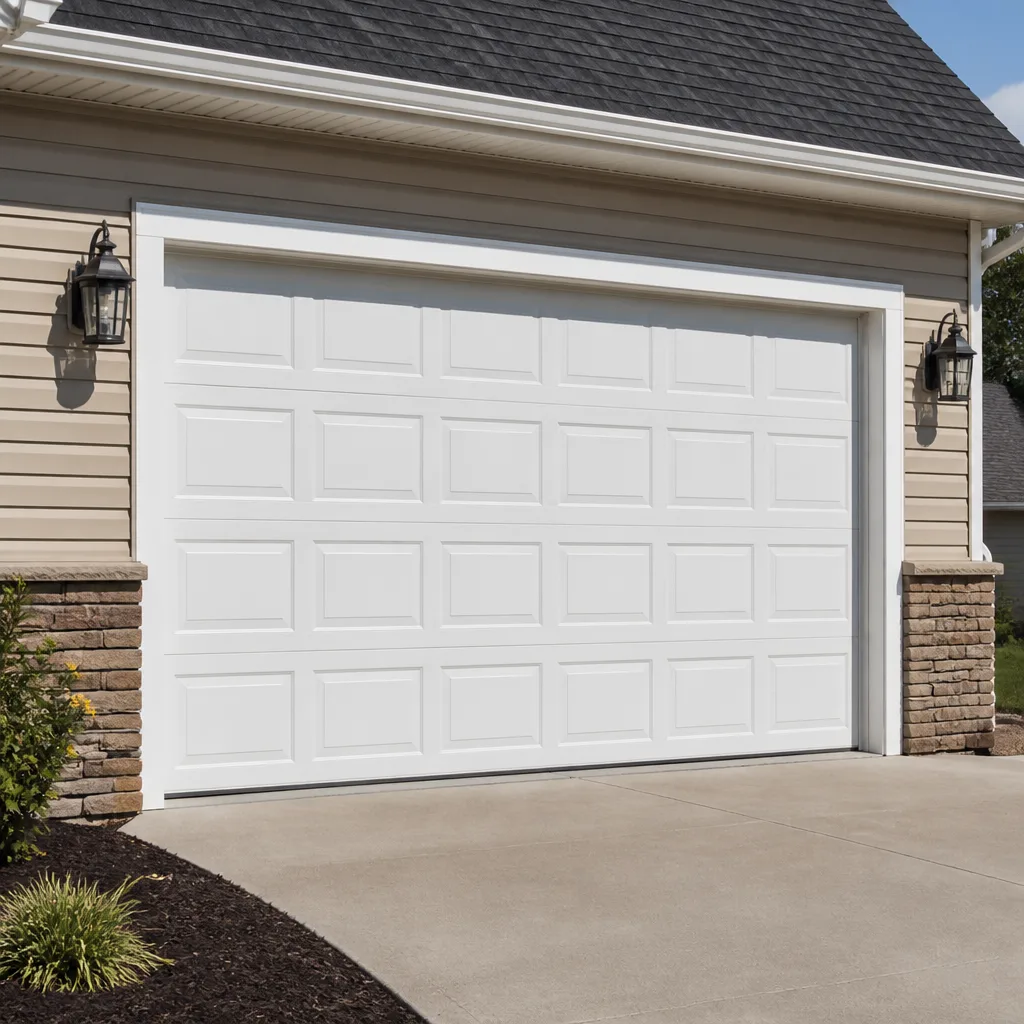
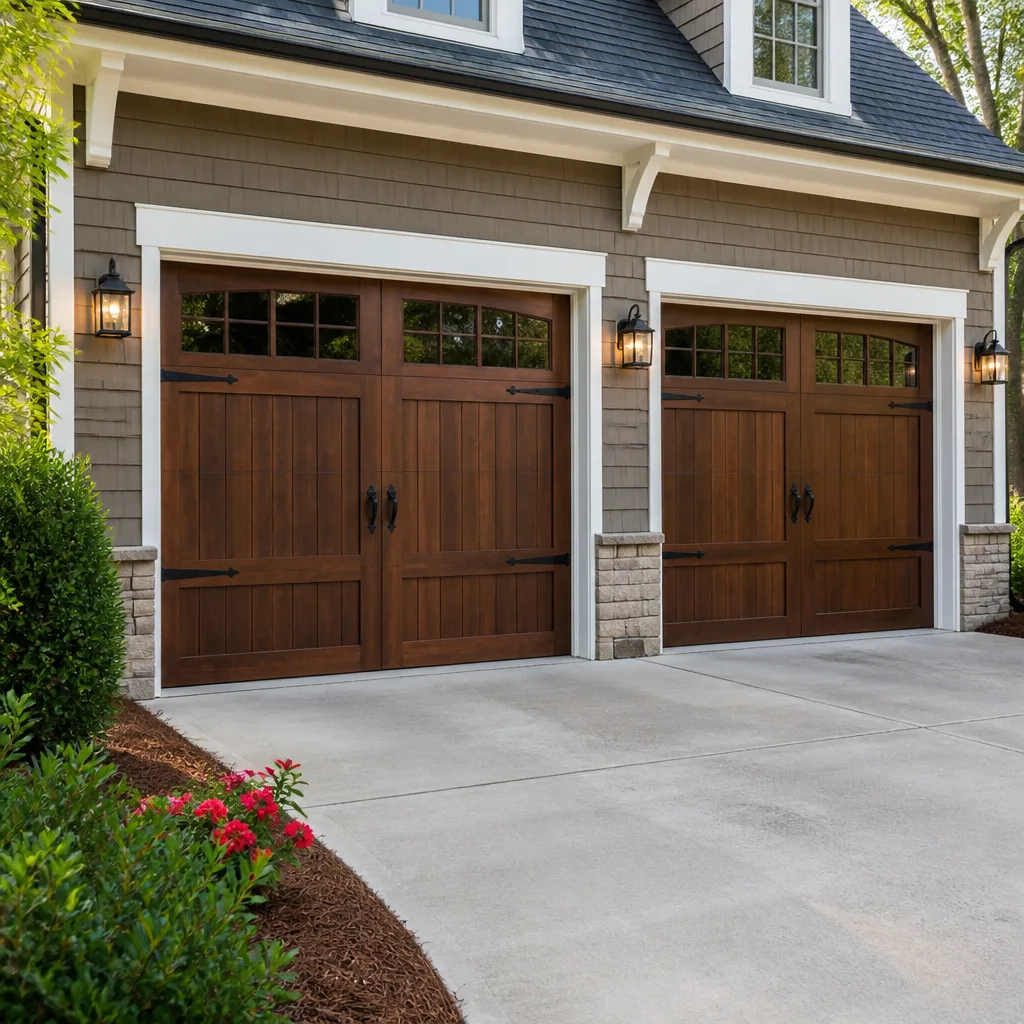
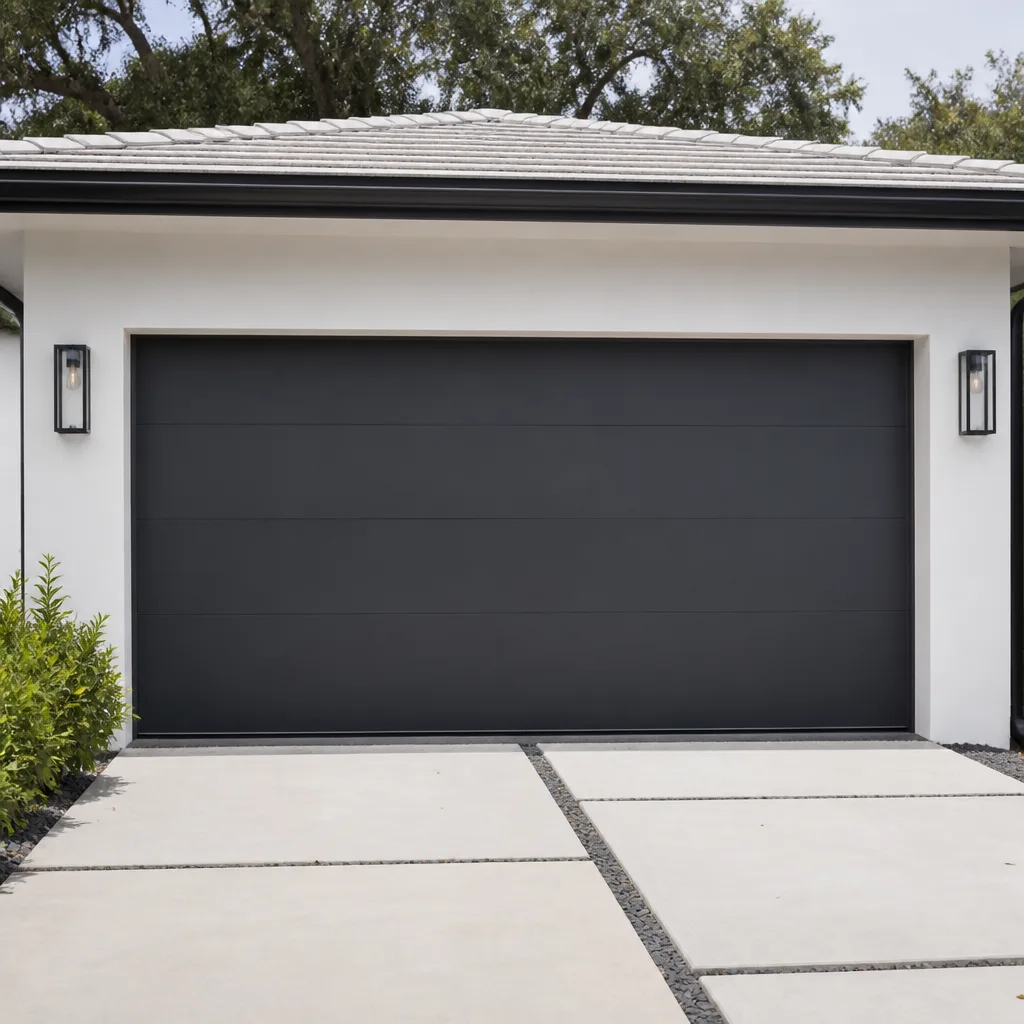
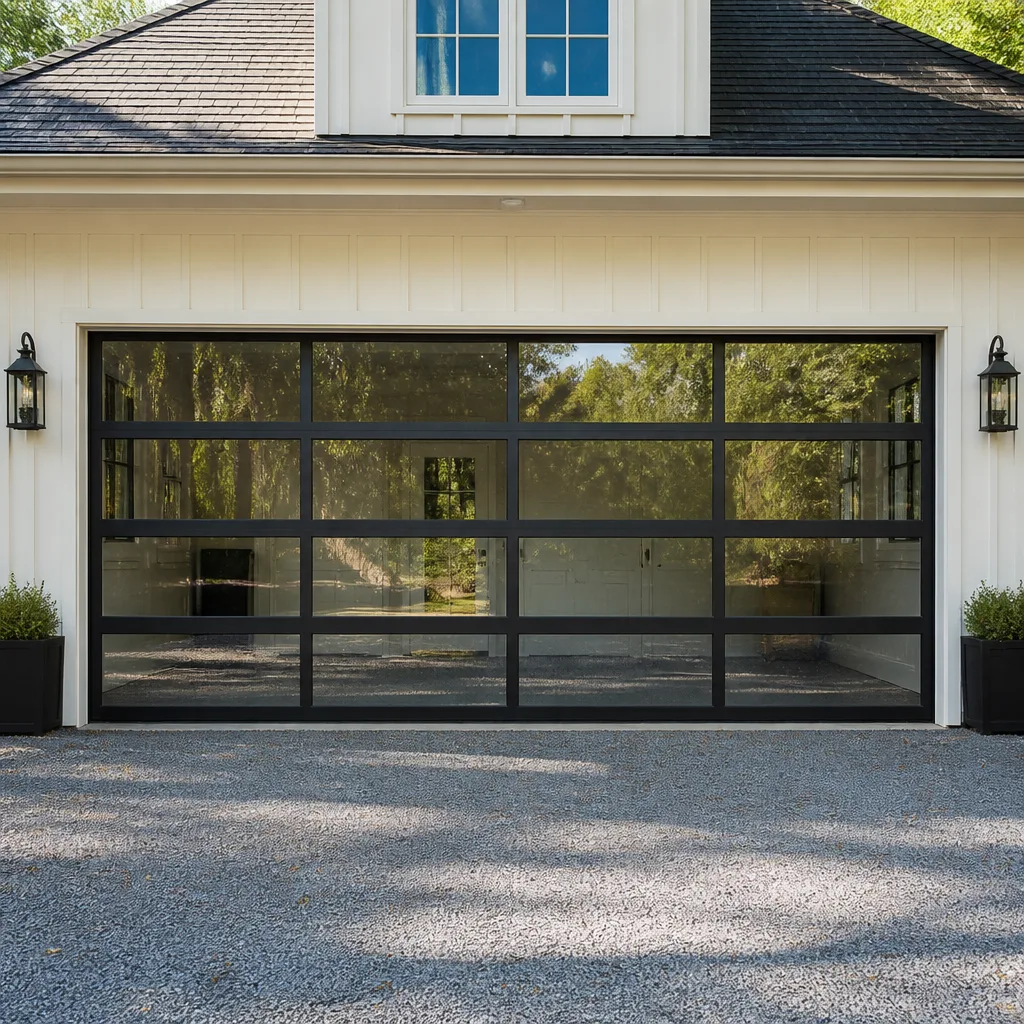
 Before
 After
After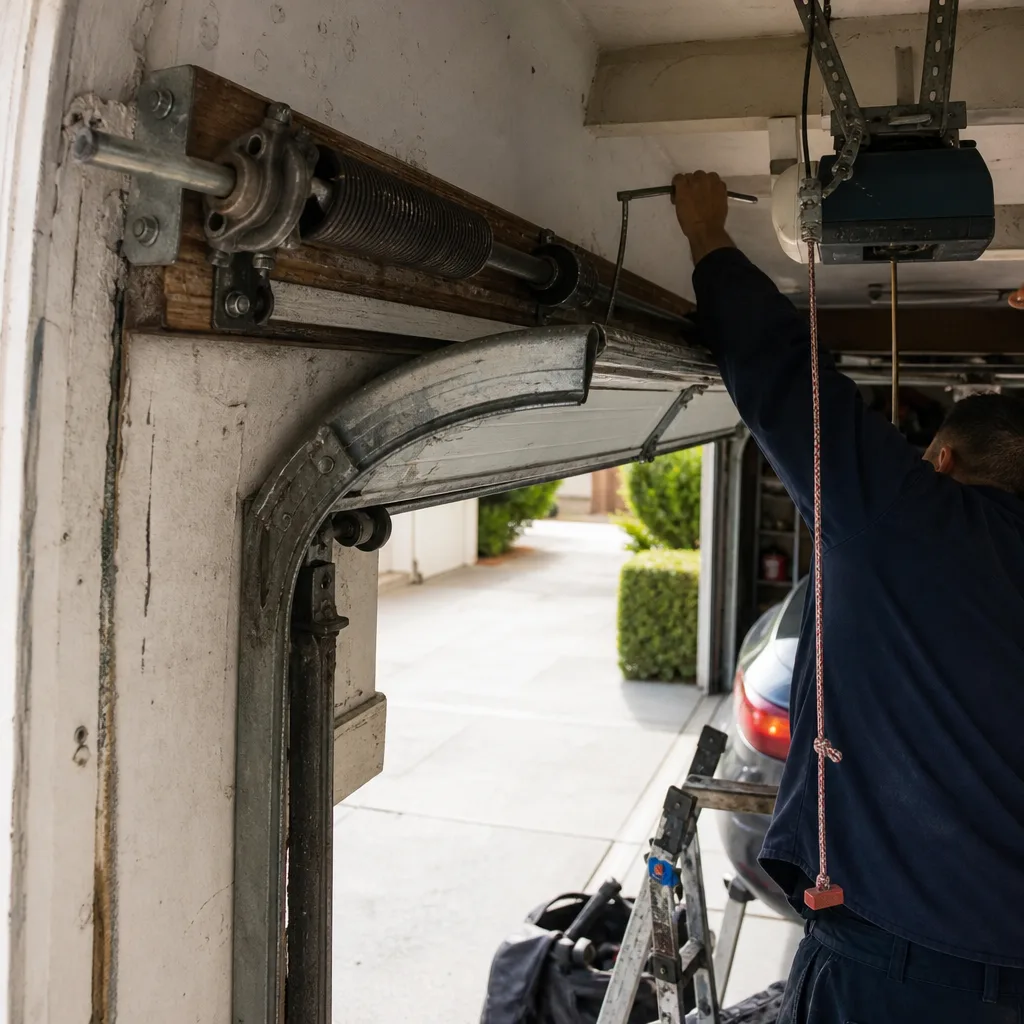 Before
 After
After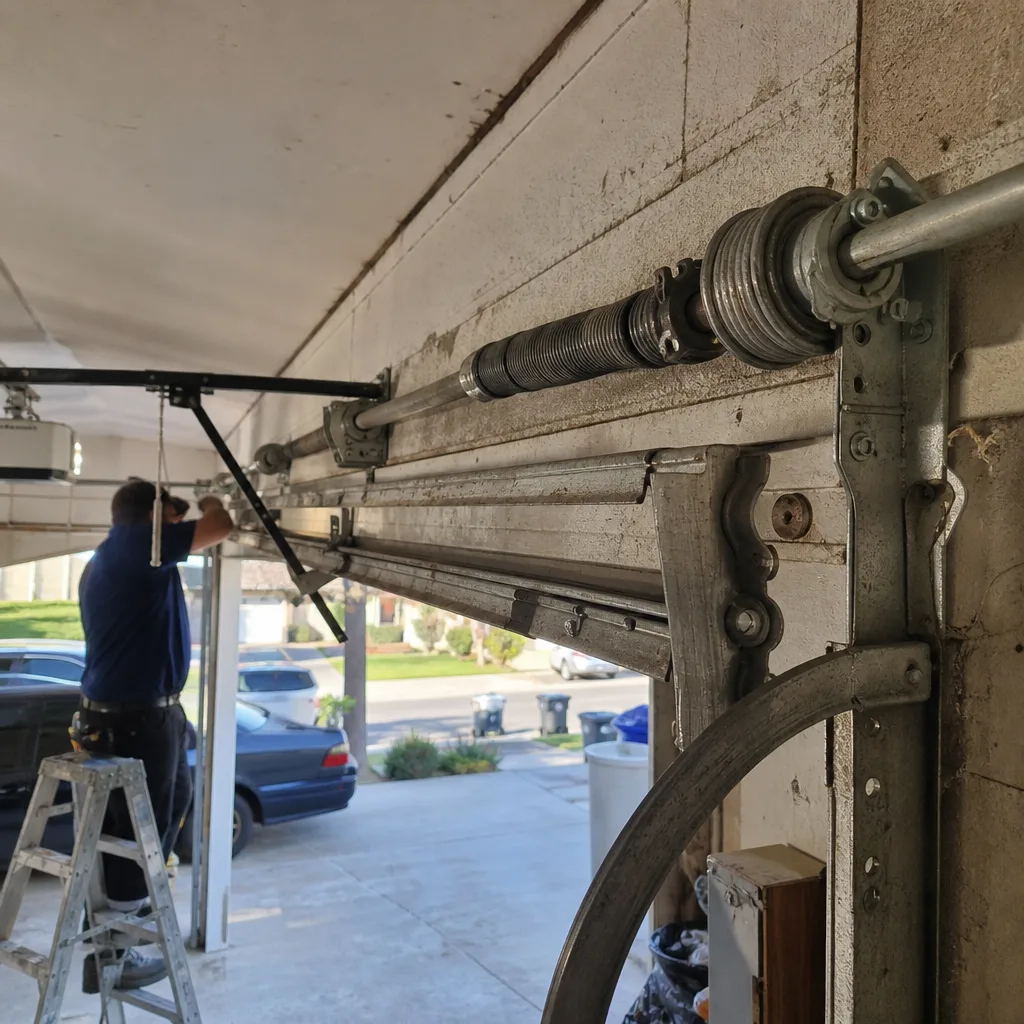 Before
 After
AfterDIY vs Professional Garage Door: The Chula Vista Homeowner’s Decision Guide
Torsion spring replacement is responsible for a disproportionate share of serious home-repair injuries in California each year. The spring itself costs $40 at a hardware store. The physics of a wound steel coil storing several hundred foot-pounds of energy does not care how handy you are. This guide draws the line task by task - which garage door work a Chula Vista homeowner can genuinely handle, which requires specific tools and prior experience, and which jobs belong to a licensed technician with the right training and insurance. We’ll cover the real math on repair costs, the insurance implications of unlicensed work on attached garages in California, and the honest prerequisites for every job on your door.
Quick Answer
Most Chula Vista homeowners can safely handle lubrication, weatherstrip replacement, and basic roller swaps. Cable adjustments, spring replacement, and opener installation require specialized tools and carry documented injury risks that make professional service the practical choice. The dividing line is not cost or pride - it’s whether a mistake can send a 150-pound door through your windshield or put you in the emergency room.
Table of Contents
- Task-by-Task Decision Matrix: What You Can Handle and What You Shouldn’t
- The Tools and Prior Experience That Change the Equation
- The Real Cost Math: DIY Mistakes vs. Professional Repair
- Chula Vista Insurance and Code Considerations for Attached Garages
- Buying Your Own Parts, Hiring for Installation: When It Works
- When Professional Service Is the Clear Choice
- Common Mistakes to Avoid
- When to Call a Professional
- Frequently Asked Questions
- The Bottom Line
Task-by-Task Decision Matrix: What You Can Handle and What You Shouldn’t
Not every garage door job carries the same stakes. We’ve organized the most common tasks by risk level, skill threshold, and the specific tools required. This is the framework we use when a Chula Vista homeowner calls us and asks, “Should I try this myself?”
Green Light: Homeowner-Appropriate Tasks
Lubrication of hinges, rollers, and tracks. This is straightforward maintenance that prevents most premature failures in Chula Vista’s coastal climate, where salt air accelerates corrosion. For a complete schedule of these tasks, see our Garage Door Repair Maintenance Checklist for Chula Vista Homeowners. Use a silicone-based spray, not WD-40. Apply sparingly to roller bearings, hinge pivots, and the inside of the track. Wipe excess. No tools beyond a rag. Do this every six months.
Weatherstrip replacement on the bottom of the door. The rubber seal slides into a retainer channel at the door’s base. Most retainers accept standard T-shaped or bead-shaped seals available at any hardware store. Remove the old seal, clean the channel of debris, lubricate lightly with dish soap, and slide the new seal in from one end. A helper makes this easier on a wide door.
Non-torsion roller replacement on sectional doors. Nylon rollers with sealed bearings simply pop out when the door is in the open position and the track is bent slightly with pliers. Steel rollers require more care. Never remove the bottom roller bracket - it is under cable tension even when the door appears relaxed.
Yellow Light: Possible with Right Tools and Experience
Cable adjustment and drum winding on extension-spring systems. Extension springs run parallel to the horizontal tracks and are safer to work with than torsion springs, but they still store significant energy. If you’ve replaced bicycle brake cables or done automotive drum brake work, the mechanical logic translates. You need winding bars that fit the cable drums securely, locking pliers, and a clear understanding of which drum handles which cable. One slip and the cable whips across the garage.
Panel dent repair on steel doors. Minor dents in flat steel panels can be pulled with a suction dent puller or filled with auto body filler and painted. This is cosmetic work with no safety implications. The challenge is color matching - many Chula Vista homes built in the 1990s and 2000s have factory-finish doors that have faded unevenly due to south-facing sun exposure. A repair that looks perfect in shade may glare in afternoon light.
Opener remote programming and travel limit adjustment. Most modern openers from LiftMaster, Chamberlain, and Genie have straightforward programming sequences printed on the motor housing. Travel limit adjustment requires a flathead screwdriver and patience. The risk is minimal - worst case, the door reverses unexpectedly or slams. Both are fixable. The danger emerges if you start adjusting force settings without understanding the difference between force and travel.
Red Light: Professional-Only Tasks
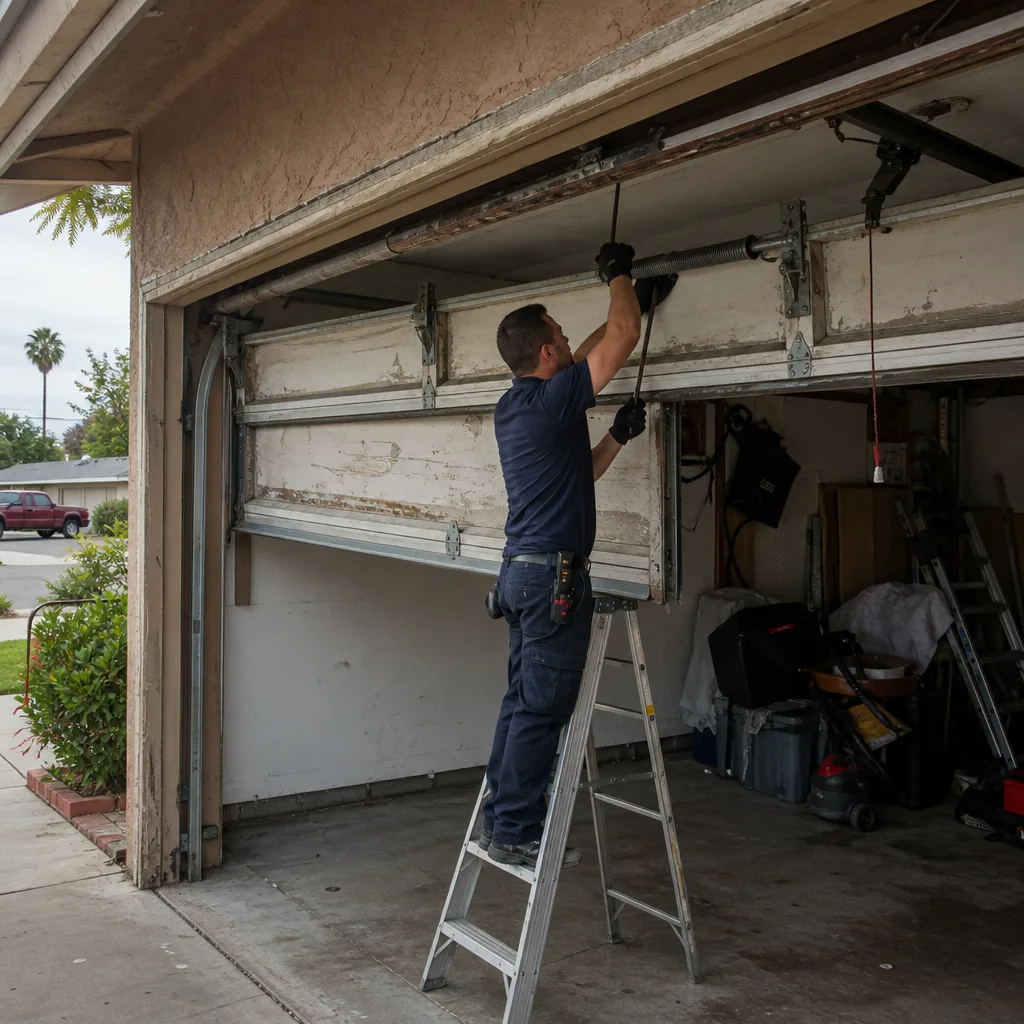
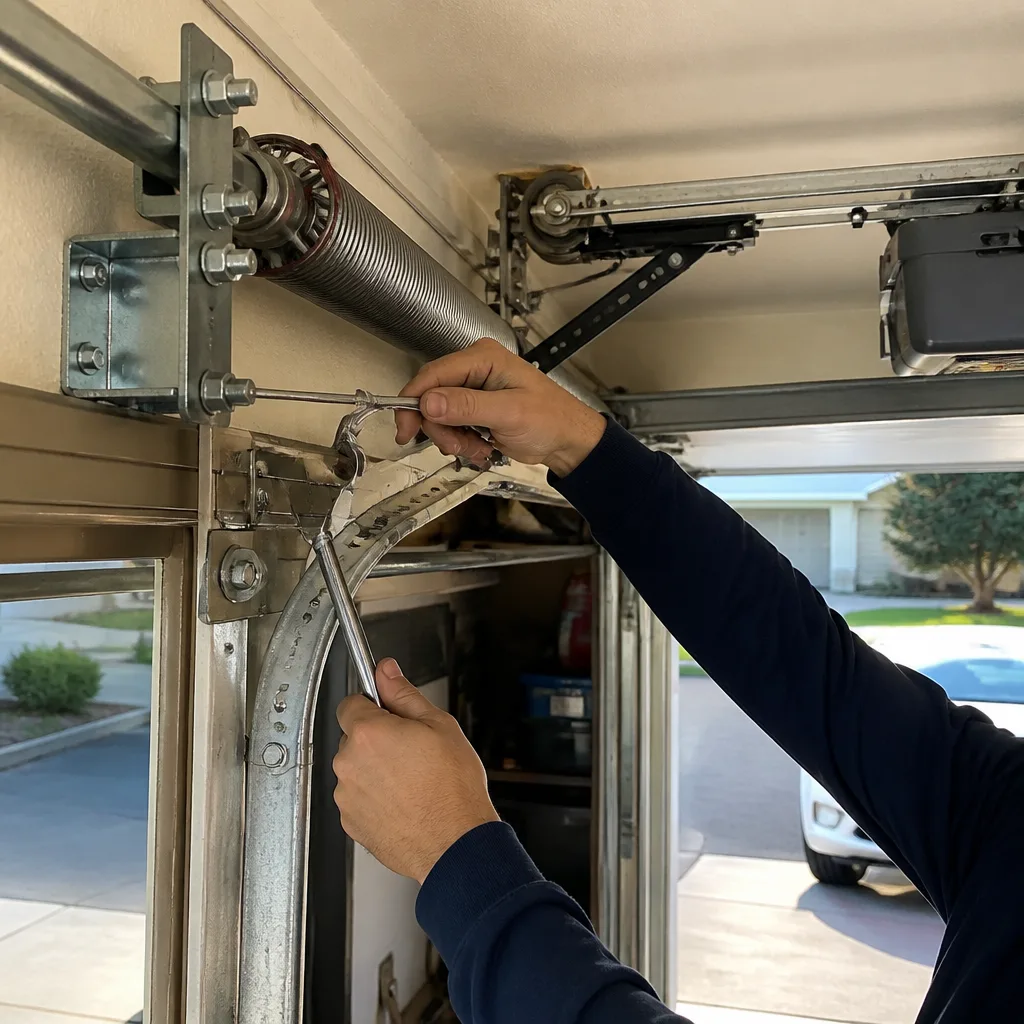
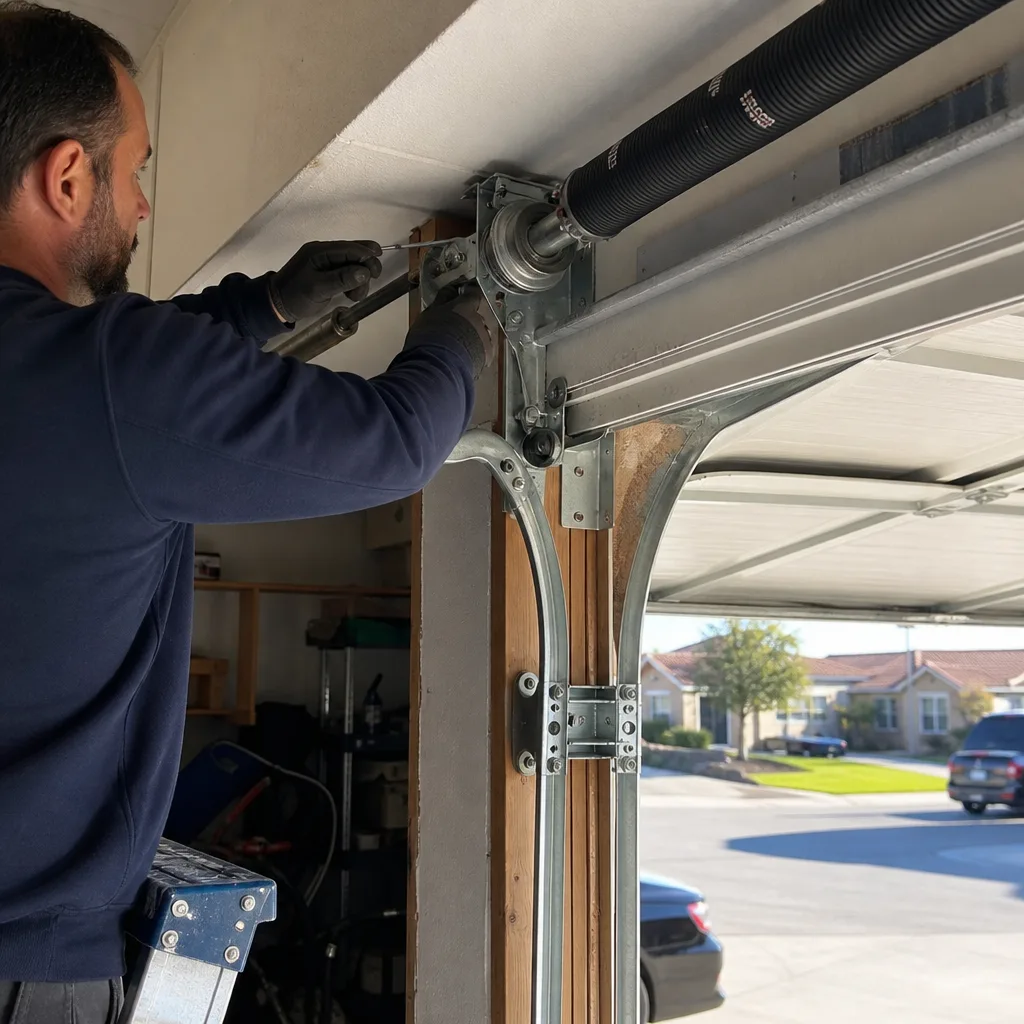
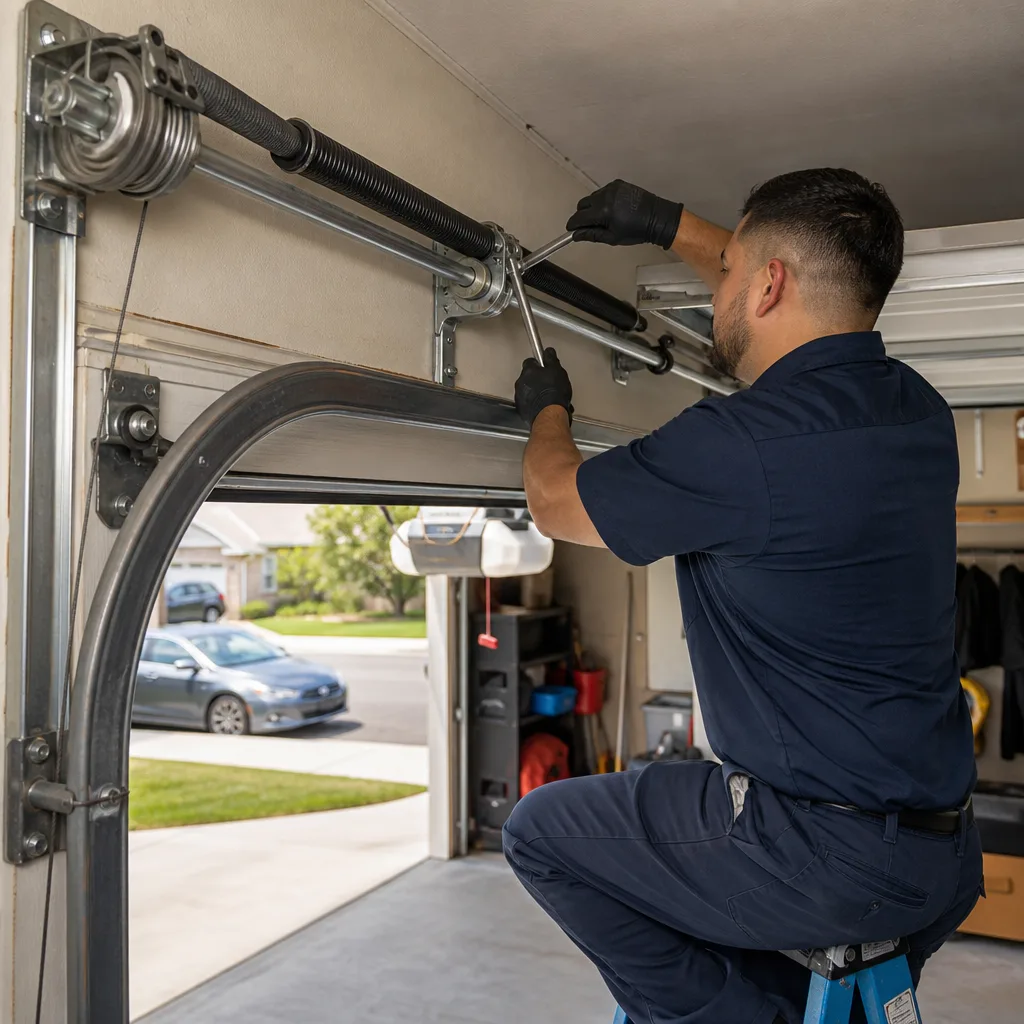
Torsion spring replacement. A standard 16-foot wide door in Chula Vista uses one or two torsion springs mounted on a steel shaft above the door opening. Winding these springs requires specific winding bars - solid steel bars inserted into the cogs of the winding cone - and the knowledge to add or release tension in quarter-turn increments. The stored energy in a wound torsion spring can sever fingers, break arms, or launch the winding bar across the garage with lethal force. We’ve seen homeowners attempt this with pipe wrenches, screwdrivers, or socket extensions. All are wrong and dangerous.
Opener installation on high or heavy doors. A 1/2-horsepower opener installed on a properly balanced door is manageable for a handy homeowner with a ladder, drill, and level. But the opener must be mounted to structural framing, not drywall. In Chula Vista’s older neighborhoods like Castle Park and Otay, garage ceiling framing is often undersized by modern standards. An opener that rips out of the ceiling mid-cycle is a hazard. The safety sensor alignment and force calibration also require methodical attention.
Track realignment after impact. When a vehicle bumps a door, the vertical track often bends or the horizontal track separates from the hanger. Realigning track without understanding the precise spacing from the door face - typically 1/2 to 3/4 inch - results in binding, roller jump, or derailment. The door may appear to work until it doesn’t, usually at speed.
| Task | Risk Level | Key Tool Required | DIY Viable? |
|---|---|---|---|
| Lubrication | Minimal | Silicone spray, rag | Yes |
| Weatherstrip replacement | Minimal | None | Yes |
| Roller replacement (non-torsion) | Low | Pliers, helper | Yes, with care |
| Cable adjustment (extension spring) | Moderate | Winding bars, locking pliers | Only with prior experience |
| Panel dent repair | Minimal | Dent puller or body filler | Yes, cosmetic only |
| Opener remote/limit programming | Low | Flathead screwdriver | Yes |
| Torsion spring replacement | Severe | Solid steel winding bars, vise grips | No |
| Opener installation (heavy door) | Moderate | Drill, level, ladder | Rarely |
| Track realignment post-impact | Moderate | Level, measuring tape | No |
The Tools and Prior Experience That Change the Equation
Some “professional-only” warnings are liability-driven blanket statements. Others reflect genuine physics. The honest distinction lies in whether you own the right tools and have done analogous work before.
What “The Right Tools” Actually Means
Torsion spring work requires solid steel winding bars - not pipe, not rebar, not socket extensions - in the exact diameter that fits your winding cone. Most residential cones accept 1/2-inch bars, but some older Raynor and Wayne Dalton systems use 7/16-inch. The bars must be 18 inches long to provide adequate leverage and hand clearance. A set costs $20-40. Without them, you are improvising with a stored-energy device that can kill you.
Cable work requires locking pliers with a proper bite, not the $9 pair from the impulse rack. The cable must be clamped to the drum or frame before any tension adjustment. We’ve arrived at Chula Vista homes where a homeowner’s pliers slipped, the cable unspooled, and the door crashed to the floor, bending the bottom section beyond repair.
Opener installation on a high ceiling requires a ladder rated for your weight plus tools, not the folding stepstool from the pantry. The motor assembly weighs 25-35 pounds and must be held in position while fastened to framing. A helper is not optional.
Prior Experience That Translates
If you’ve replaced automotive drum brakes, the cable-and-drum logic of extension spring systems will feel familiar. If you’ve done bicycle wheel truing, the precision of track alignment makes sense. If you’ve installed a ceiling fan into a joist box, you understand the difference between drywall and structural mounting. These experiences don’t make torsion spring work safe, but they do mean you can accurately assess whether a task exceeds your skill.
The honest prerequisite for any yellow-light task: you must be able to visualize the failure mode. If you cannot clearly describe what happens if your hand slips, your clamp fails, or your ladder shifts, you are not prepared.
The Real Cost Math: DIY Mistakes vs. Professional Repair
The scare scenarios some companies publish - “$1,000 in damage from a botched spring job!” - are often inflated. The real math is more specific and more useful. For a detailed look at typical expenses, see our Garage Door Cost Breakdown: The Chula Vista Homeowner’s Reference for 2026.
Scenario: Torsion Spring Replacement
A pair of torsion springs costs $40-80 at a hardware supplier. The winding bars add $25. If you complete the job successfully, you’ve saved $150-250 versus professional service in Chula Vista.
If you mismeasure the spring - wire gauge, inner diameter, and length all must match precisely - the door will be improperly balanced. An unbalanced door strains the opener, wears cables unevenly, and may reverse unexpectedly. The cost to correct: a service call at standard rates plus the replacement spring you already bought. Net savings: negative.
If the winding bar slips and the door drops, typical damage includes a bent bottom section ($200-400), damaged cables ($80-150), and potentially a stripped opener gear ($150-250 parts plus labor). In 2023, we replaced a complete 16-foot door in Chula Vista’s Eastlake neighborhood after a homeowner’s winding bar launched into the door face during tension release. The $40 spring became a $1,800 door replacement.
Scenario: Opener Installation
A mid-grade Craftsman or Chamberlain opener costs $200-350 retail. Professional installation in Chula Vista runs $300-500 including opener, depending on ceiling height and whether new framing or electrical is needed.
Common DIY mistakes: mounting to drywall instead of joists ($150-300 to repair ceiling and reinstall), incorrect travel limits causing door slam ($0 if caught early, $200-500 if sections bend), and reversed safety sensors creating a hazard. The sensors are not optional - federal law since 1993 requires them, and California’s strict liability standards mean a homeowner may face legal exposure if an unprotected door injures someone.
The Honest Break-Even
For lubrication, weatherstrip, and roller replacement, DIY is clearly economical. For torsion springs, the break-even requires perfect execution on the first attempt - and the downside risk is bodily injury, not merely financial loss. For opener installation, the break-even is narrower than it appears once you value your time and account for the tools you may not own.
Chula Vista Insurance and Code Considerations for Attached Garages
California homeowners should understand a specific wrinkle that doesn’t appear in generic DIY guides: work performed on attached garages may affect your insurance position if injury or property damage occurs.
The Unlicensed Work Documentation Problem
California requires a C-61/D-28 (Garage Door and Gate) contractor license for installation and repair work valued over $500 in materials and labor. If you perform torsion spring replacement yourself and the door later fails, injuring a visitor or damaging a vehicle, your homeowner’s insurance carrier may investigate whether the work was performed by a licensed contractor. Documentation of unlicensed work on a permanent fixture can complicate claims, particularly if the insurer determines the work contributed to the loss.
This is not theoretical. In 2019, a Chula Vista homeowner in the Terra Nova area faced a denied liability claim after a self-installed opener detached from the ceiling, damaging a visitor’s car. The insurer cited unlicensed modification of a structural element. The homeowner’s eventual out-of-pocket cost exceeded professional installation by a factor of four.
Permit Requirements for New Door Installation
The City of Chula Vista requires permits for new garage door installation when the opening is modified or when an automatic opener is installed on a previously manual door. For full details on local requirements, see Garage Door Permits, Codes & Inspections in CA: What You Need to Know. Permit exemption applies to “like-for-like” replacement of an existing door or opener of the same size and type. If you DIY a new door and skip the permit, you may face issues at resale - Chula Vista’s building records are accessible to title companies, and unpermitted work can delay closing.
HOA and Neighborhood Considerations
Several Chula Vista neighborhoods, particularly newer developments in Otay Ranch and Rolling Hills Ranch, have active HOAs with design review requirements for garage door style and color. A DIY installation that violates HOA guidelines can result in fines and a second replacement. Professional contractors in Chula Vista are familiar with common HOA palettes and can advise before you order.
Buying Your Own Parts, Hiring for Installation: When It Works
The middle path - sourcing your own parts and hiring a technician for installation - appeals to cost-conscious homeowners who want to reduce markup. This arrangement works in specific circumstances and fails in others.
When It Works
- Opener replacement with a specific model in mind. If you’ve researched and want a particular LiftMaster 8500W wall-mount or a specific Genie chain-drive model, buying retail and hiring for installation can save $50-100. The technician installs what you provide, and you retain the manufacturer’s warranty.
- Decorative hardware or window inserts. These are purely cosmetic, non-structural additions. A technician can drill and mount hardware you supply without warranty complications.
- Replacement remotes and keypads. No installation complexity, minimal labor charge.
When Contractors Won’t Honor Warranty
Most reputable garage door companies, including Mainspring Garage Door Co., will not warranty parts supplied by the homeowner. The reasoning is straightforward: we cannot verify how the part was stored, whether it’s the correct specification, or whether it was damaged in shipping. If a homeowner-supplied spring fails in 30 days, we cannot absorb the replacement cost.
Additionally, if a part fails and causes secondary damage - a defective cable snapping and derailing the door - the contractor’s insurance may not cover damage traceable to a non-warranted component. The homeowner assumes that risk.
The Practical Middle Ground
If you want to reduce parts markup, ask your contractor for an itemized quote and compare their part prices to retail. Many Chula Vista homeowners are surprised to find that professional-grade parts from a contractor - springs rated for 25,000 cycles rather than 10,000, for example - cost only marginally more than retail hardware-store equivalents. The quality difference is substantial. A 25,000-cycle spring on a door used four times daily lasts 17 years; a 10,000-cycle spring lasts 7.
When Professional Service Is the Clear Choice
Some situations make the DIY question irrelevant. The door is unsafe to operate, the repair is beyond your tools, or the stakes involve insurance, permits, or warranty protection.
The door is stuck open or closed with a vehicle trapped inside. This is an emergency, not a learning opportunity. A door stuck open compromises security; a door stuck closed may mean a broken spring or cable with residual tension that makes manual release dangerous.
The door has sustained visible impact damage. Even if it still operates, the structural integrity of sections, track, or hardware may be compromised. A bent track that appears to function will eventually cause roller failure or derailment.
You are selling the home within 12 months. Buyers and inspectors in Chula Vista’s competitive market scrutinize garage door operation. A professional installation with permit documentation and written warranty transfers cleanly. DIY work raises questions.
The door is original to a pre-1993 home and has no safety sensors. Federal law requires automatic reversal and photo-eye sensors. Installing these on an older opener is often impractical; replacing the opener is the compliant path. A licensed contractor provides documentation of compliance that protects you at sale.
For garage door repair in Chula Vista, professional service includes diagnosis of underlying issues - a broken spring often reveals worn cables or a fatigued opener, and addressing only the obvious failure invites a second call. Our technicians arrive with springs, cables, rollers, and openers on the truck, so most jobs finish in a single visit.
Common Mistakes to Avoid
- Using a screwdriver as a winding bar. We’ve found Phillips-head screwdrivers embedded in Chula Vista garage ceilings where they launched from a slipping homeowner’s grip. Solid steel winding bars cost $25. Your emergency room copay does not.
- Lubricating the track itself. The track is not a friction surface; rollers roll, they slide. Oil or grease on the track collects dust and hardens into a grinding paste. Lubricate roller bearings and hinge pivots only.
- Ignoring spring pairing on dual-spring doors. If one torsion spring breaks, both must be replaced. They were installed together and have identical cycle fatigue. A new spring paired with an old spring creates imbalance and premature failure.
- Measuring springs while wound. A wound spring measures shorter than its actual length. Unwind completely before measuring wire gauge, inner diameter, and overall length. Wrong specs mean wrong torque and a door that fights its own hardware.
- Disconnecting the opener without bracing the door. The opener arm often provides structural support to a door in the open position. Disconnecting it to “make access easier” can release an improperly supported door. Use locking pliers on the track below a roller to create a mechanical stop.
- Assuming all openers fit all doors. A 3/4-horsepower opener on a lightweight aluminum door will slam it closed; a 1/3-horsepower opener on a heavy insulated steel door will strain and fail. Match opener capacity to door weight and size, not to what’s on sale.
- Skipping the permit for a new door in Chula Vista. The City of Chula Vista’s building department can require permit correction before closing, and unpermitted work disclosure is legally required on sale documents. The permit costs $150-250 and prevents $2,000 in closing delays.
When to Call a Professional
Call a licensed technician when the job involves torsion springs, cable replacement, track realignment, opener installation on a high or heavy door, or any situation where the door is unsafe to operate. The cost of professional service is predictable; the cost of injury or secondary damage is not.
Garage door installation in Chula Vista requires permit awareness, structural assessment of mounting points, and precise balance calibration. Installation is measured, ordered, and scheduled - not a same-day rush, but a done-right process with a written outcome.
Mainspring Garage Door Co. offers free estimates in Chula Vista. Carl Dutton and our team answer calls personally, 24 hours a day, including nights, weekends, and holidays. Most repairs are completed in a single visit because our trucks carry the necessary parts. Every job is covered by our 90-Day Done Right Promise: if it’s not right, we return at no charge, with no paperwork or dispute process. The price is stated before any work begins. Call (619) 901-2874 for a free estimate.
Frequently Asked Questions
Professional torsion spring replacement in Chula Vista typically runs $180-340 for a standard residential door, including parts, labor, and balance adjustment. Extension spring systems cost slightly less. The price varies with door size, spring specification, and whether dual springs are required. Call (619) 901-2874 for an exact quote - estimates are free.
You should not replace even one torsion spring without proper winding bars and training. On dual-spring doors, replacing only one spring creates dangerous imbalance and guarantees premature failure of the remaining spring. Professional replacement includes matching both springs to the door’s weight and cycle requirements.
California insurers may deny or reduce claims where unlicensed work on a permanent fixture contributed to the loss. Attached garages are considered part of the dwelling structure, and work affecting their structural or mechanical integrity is subject to scrutiny. Licensed contractor documentation protects your coverage position.
Like-for-like replacement of an existing door or opener does not require a permit in Chula Vista. New installation, modification of the opening size, or first-time automatic opener installation does require a permit through the City of Chula Vista Building Department. Your contractor should handle permit pull as part of the project.
A safely installed opener is mounted to structural framing (never drywall), has properly aligned photo-eye sensors within 6 inches of the floor, reverses on contact with a 2×4 laid flat in the door path, and has force settings calibrated to the door weight. If you cannot verify all four conditions, have a technician inspect.
You may supply cosmetic items like decorative hardware or window inserts. For springs, cables, openers, and structural components, we install parts we source to ensure specification accuracy and warranty coverage. Our part prices are competitive with retail, and the quality is professional-grade. Ask for an itemized quote to compare.
The Bottom Line
The DIY-versus-professional question for garage doors is a series of task-specific decisions, not a single answer. Lubrication, weatherstrip, and roller replacement are genuinely homeowner-appropriate. Torsion spring work is genuinely dangerous and belongs to trained technicians with the right tools and insurance. Everything in between depends on your specific tools, prior experience, and honest assessment of failure modes. In Chula Vista’s climate and regulatory environment, the practical homeowner knows where the line sits - and when a square deal from a local shop that stands behind its work is the smarter choice than a $40 hardware-store part and a gamble.
Written by Carl Dutton, Owner at Mainspring Garage Door Co., serving Chula Vista since 2016.