
Last updated September 10, 2026
Full 25-point door and opener safety check with every visit - springs, cables, rollers, tracks, and your LiftMaster or Chamberlain opener included
You get a price before we start. It does not change when the truck arrives.
 Before
 After
After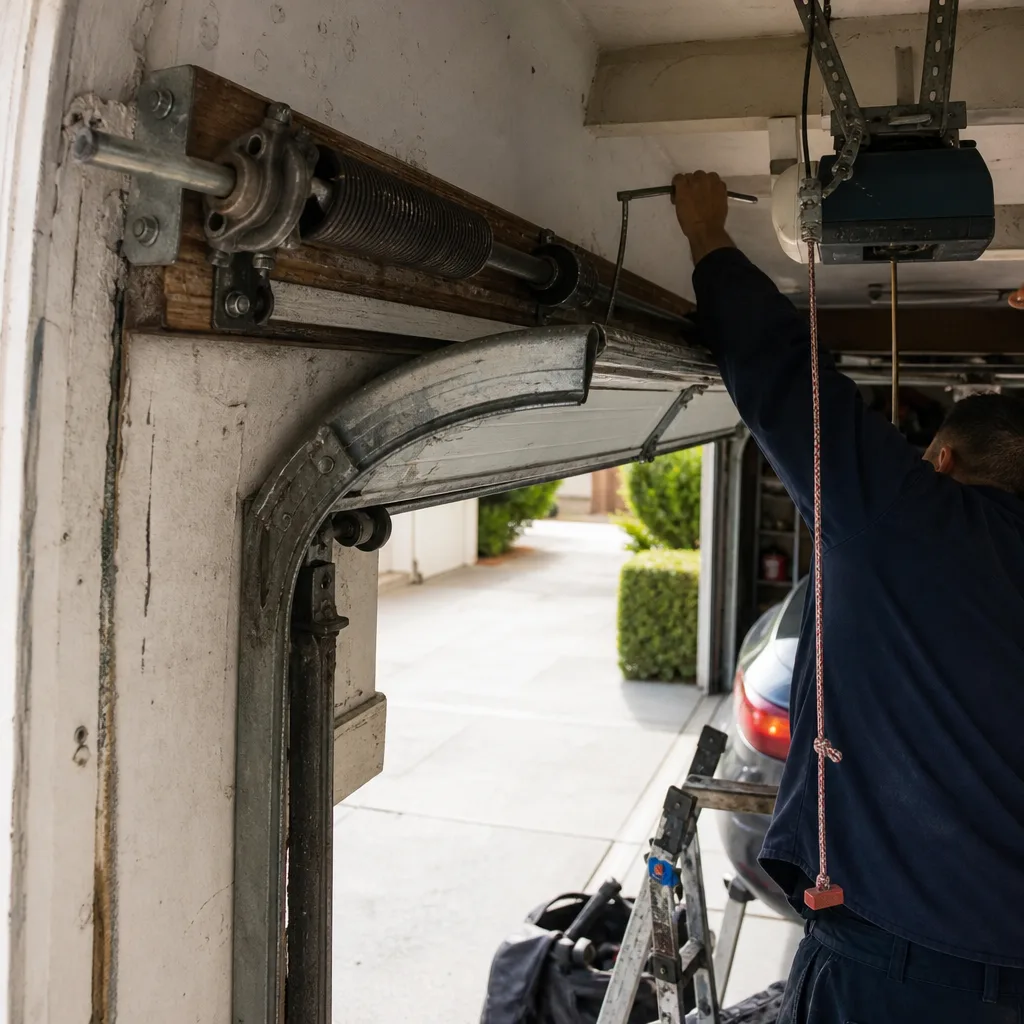 Before
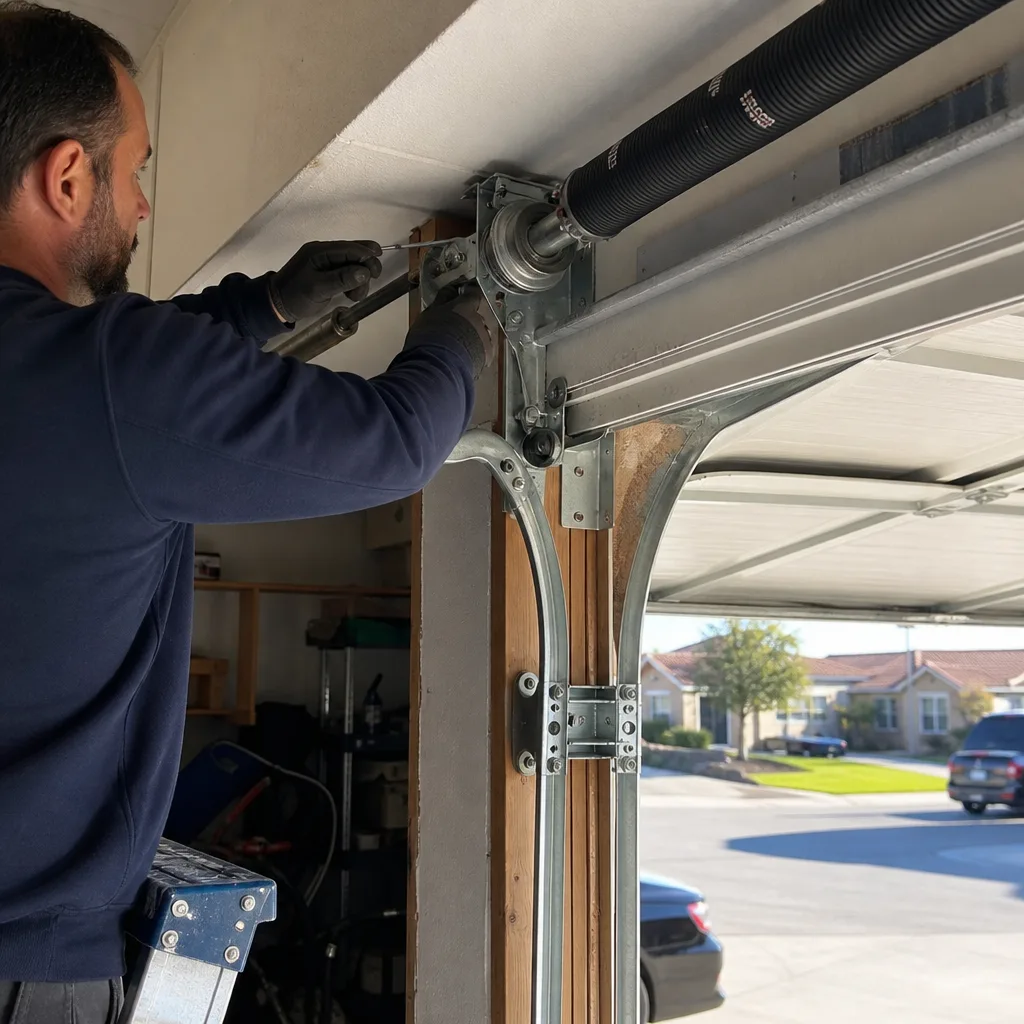 After
After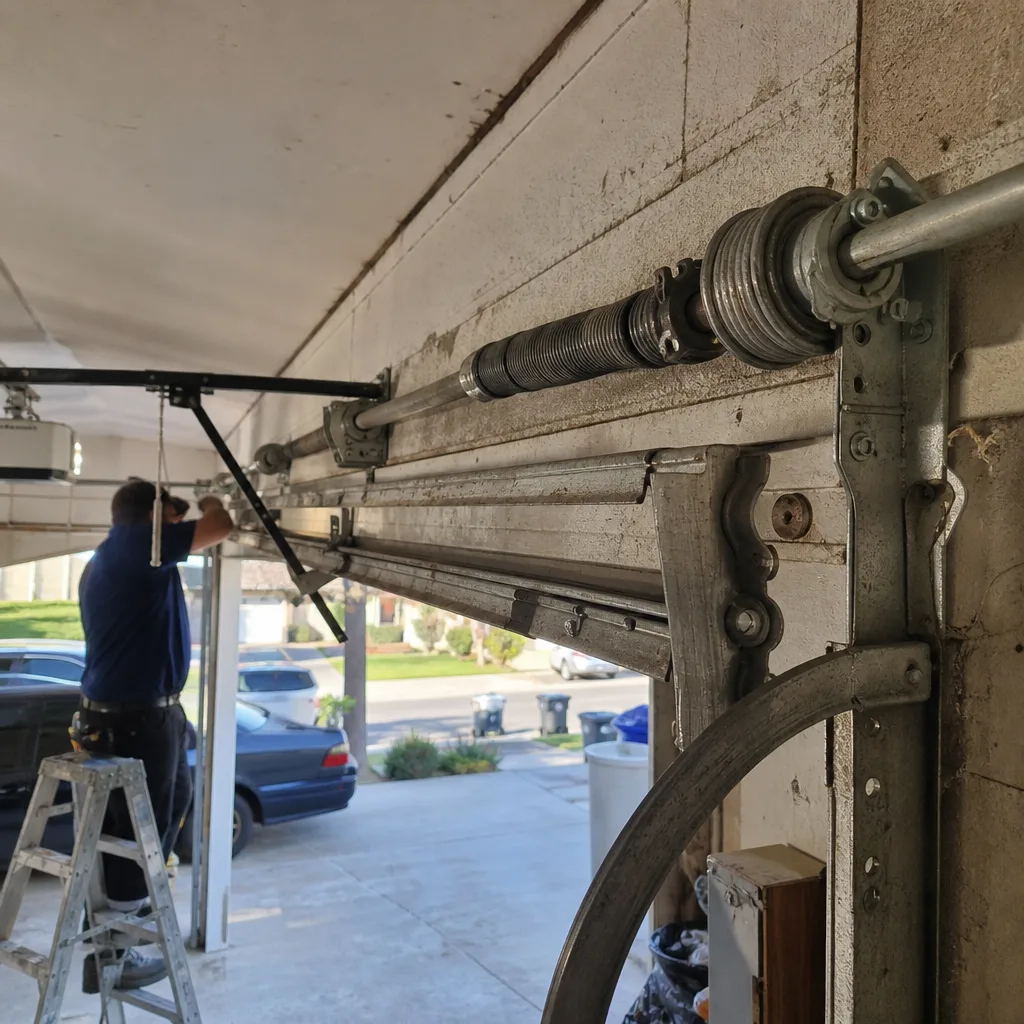 Before
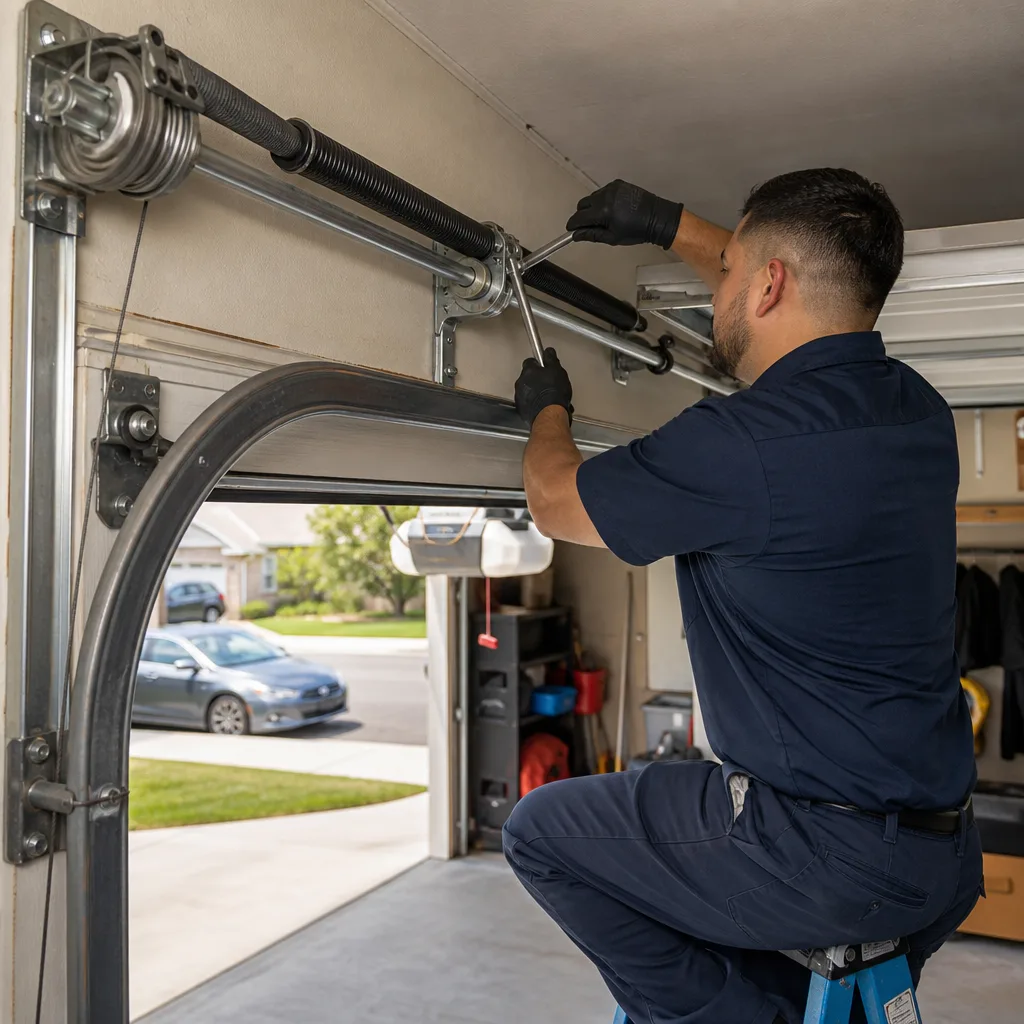 After
AfterGarage Door Warning Signs: A Chula Vista Homeowner’s Reference Guide
A garage door that reverses halfway up for no apparent reason isn’t a sensor problem nine times out of ten - it’s a spring losing tension. Homeowners who clean the sensors and call it fixed are masking a failure that puts 200 pounds of door over their car within weeks. In Chula Vista, where salt air from the bay accelerates corrosion and afternoon sun beats on south-facing doors year-round, warning signs show up faster than they do inland. This guide - alongside our complete guide to garage door in Chula Vista - pairs every symptom with its mechanical root cause and a clear action: watch it, schedule it, or stop using the door now.
Quick Answer
Most garage door failures in Chula Vista announce themselves weeks in advance through specific noises, visual changes, and movement irregularities. A rhythmic squeak needs lubrication, a grinding pop signals a worn roller or bearing, and a sharp bang means a broken spring - stop using the door immediately. The manual balance test, performed monthly, catches spring fatigue before it becomes a hazard; for more on this, see our seasonal garage door care for Chula Vista guide.
Table of Contents
- Noise Classification: What Your Garage Door Is Actually Telling You
- Visual Cues Specific to Chula Vista Homes
- The Balance Test: How to Perform It and Read the Results
- Opener Behavior Flags and What They Mean
- Three Warning Signs That Mean Stop Using the Door Today
- Common Mistakes to Avoid
- When to Call a Professional
- Frequently Asked Questions
Noise Classification: What Your Garage Door Is Actually Telling You
Not every sound from a garage door means trouble. Some mean maintenance. Others mean a component is hours or days from failure. Learning the difference - covered in depth in our step-by-step guide to hiring a garage door contractor in Chula Vista - saves homeowners from unnecessary anxiety on one end and from a door stuck half-open on the other.
The Rhythmic Squeak: Lubrication Needed
A squeak that repeats in time with the door’s movement - once per roller, or once per spring coil as it winds - is almost always metal-on-metal friction at a hinge, roller, or spring bearing. The sound is high-pitched and regular, not sharp or random.
What to do: Apply a silicone-based garage door lubricant to the hinges, roller bearings, and spring coils. Do not use WD-40; it attracts dust and turns into grinding paste within weeks. In Chula Vista’s dry summer months, this maintenance need shows up more often because lubricant evaporates faster. We see this particularly in Otay Ranch and Eastlake homes with doors that face direct afternoon sun.
Action level: Watch and maintain. Schedule if the squeak returns within two weeks of lubrication.
The Grinding Pop: Worn Bearing or Roller
A deeper, irregular crunch or pop that happens at the same point in the door’s travel points to a failing roller, a cracked bearing, or a bent track section. The door may shudder slightly when the sound occurs. This is not an emergency, but it is not normal either.
What to do: Identify the location by watching and listening as the door moves. A failing roller will often wobble visibly. In Chula Vista’s coastal zones, from the Third Avenue corridor down to the marina, salt air accelerates bearing corrosion. We’ve replaced rollers in Harbor Side homes that were five years old and rusted solid.
Action level: Schedule within two weeks. The roller will not heal itself, and a seized roller can derail a door.
The Sharp Bang: Spring Failure
A sound like a firecracker or gunshot from above the door is a broken torsion spring. The door may drop hard, stop mid-travel, or appear to work but struggle visibly. This is not a subtle sound. If you heard it, you know.
What to do: Do not operate the door. Disconnect the opener by pulling the red emergency release cord if the door is closed. A door with a broken spring is dead weight - 150 to 250 pounds of unbalanced panel that can slam without warning. The opener is not designed to lift this load and will burn out its motor trying.
Action level: Stop using the door now. Call for same-day service.
The Motor Strain: Opener Working Too Hard
A garage door opener that labors, slows, or sounds like it’s struggling - groaning, humming loudly, or smelling hot - is often compensating for a mechanical problem it was never meant to handle. The motor is not failing. The door is.
Common causes in Chula Vista include spring tension loss from metal fatigue, track misalignment from foundation settling (common in older neighborhoods like Castle Park and Chula Vista Hills), or binding rollers from corrosion. The opener is the symptom, not the disease.
Action level: Schedule within one week. Running an opener against excess load shortens its life and risks overheating.
Visual Cues Specific to Chula Vista Homes
Chula Vista’s geography creates conditions that show up on garage doors differently than they do in inland or desert climates. The marine layer, salt air, intense UV, and occasional heavy winter rains each leave their own signature.
Rust Streaking from Spring Mounts
Look at the torsion spring assembly mounted above the door. Rust-colored streaks running down from the spring cones or bearing plates indicate moisture has been collecting in the hardware. In Chula Vista, this is most common within two miles of the bay, in neighborhoods like Bayfront, Harborside, and the Village area. The salt air condenses on cool metal overnight, and morning dew keeps it wet longer than it would stay inland.
Rust streaking does not mean the spring will break tomorrow. It means the spring is aging in accelerated conditions. We replace springs in coastal Chula Vista homes that show this pattern at eight to ten years, where inland springs often last twelve to fifteen.
What to check: Wipe the streaks and return in a week. If they reappear, the hardware is actively corroding. Schedule an inspection.
Panel-Bottom Oxidation in Coastal Zones
Steel door panels oxidize from the bottom up when moisture wicks from a concrete slab that stays damp. In Chula Vista, this shows up in homes near the marshy areas off H Street and in older neighborhoods with original concrete driveways that have settled toward the door. The bottom two inches of panel develop a rough, orange-brown texture. Left alone, it becomes holes.
What to check: Run your hand along the bottom panel edge. Flaking or pitting means the protective coating has failed. This is not cosmetic. A rusted bottom panel weakens the door’s structure and can cause it to fold or jam under load.
Action level: Schedule within one month for panel assessment. Replacement may be needed if rust has penetrated.
Weatherstrip Curling from UV Exposure
The rubber seal at the bottom of the door hardens, cracks, and curls upward after years of sun exposure. In Chula Vista, south- and west-facing doors show this in four to six years, where shaded doors may last ten. A failed seal lets water, dust, and rodents in. It also means the door is no longer sealing against the slab, which affects temperature control in attached garages.
What to check: Close the door and look for daylight under the seal. If you can slide a pencil under it anywhere, the seal is not doing its job.
Action level: Schedule when convenient. This is maintenance, not emergency, but it contributes to other problems if ignored.
Cable Fraying at the Drum
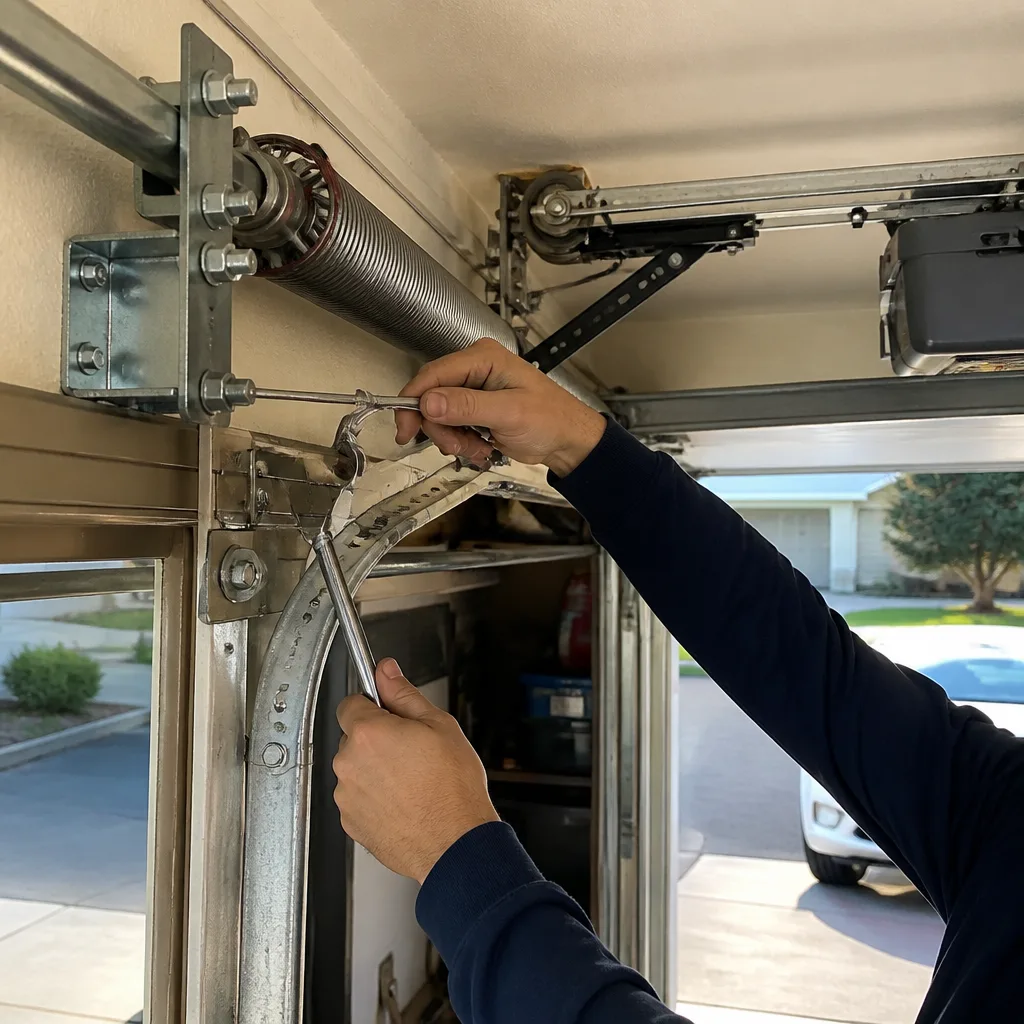
Lift cables wrap around drums at each end of the torsion tube. Where the cable bends around the drum, individual strands separate and fray. This is visible with the door closed and the lights on. A cable with more than three visible frayed strands, or any rust powder in the area, is approaching failure.
In Chula Vista, we see accelerated cable wear in homes near the coast where salt air corrodes the cable from the inside out. A cable can look acceptable on the outside and be weakened core-deep.
Action level: Schedule within one week. A failed cable drops one side of the door hard and can cause panel damage or injury.
The Balance Test: How to Perform It and Read the Results
The manual balance test is the single most useful check a homeowner can perform. It reveals spring tension loss before it becomes a failure, and it takes two minutes. We teach this to every Chula Vista customer who asks what they can monitor themselves, and we share more guides & resources for ongoing maintenance.
How to Perform the Test
- Close the door fully. Disconnect the opener by pulling the red emergency release cord. The door must be free to move by hand.
- Lift the door manually to the halfway-open position. Use both hands, lift smoothly, and let go carefully.
- Observe what the door does.
Reading the Results
- The door stays put: Springs are properly balanced. This is a passing result.
- The door drifts downward slowly: Spring tension is slightly low. The opener is working harder than it should. Schedule service within two to four weeks.
- The door drifts downward quickly or slams: Significant tension loss. The opener is at risk of damage, and the door is a hazard if the opener fails or disconnects. Schedule within one week.
- The door drifts upward: Springs are over-tensioned, which is rare but stresses hardware and creates a snap-risk on release. Schedule within one week.
- The door is heavy to lift or won’t stay at halfway: One or both springs have failed or are near failure. Stop using the door and call for service.
In Chula Vista’s older neighborhoods, we see balance problems develop faster in homes with original single-spring setups from the 1970s and 1980s. A single spring doing the work of two wears predictably and fails hard. Modern doors use two springs for redundancy, but many Chula Vista Hills and Rancho del Rey homes still run original hardware.
Safety note: Do not attempt to adjust spring tension yourself. Torsion springs store lethal energy. The balance test is observation only. Adjustment requires winding bars, training, and the understanding that a mistake can cause serious injury. We’ve responded to emergency calls in Chula Vista where a homeowner’s DIY spring adjustment sent a winding bar through a garage wall.
Opener Behavior Flags and What They Mean
Modern openers from LiftMaster, Chamberlain, and Genie have diagnostic features, but the basic behaviors - slow movement, uneven lifting, and phantom operation - tell their own stories. The opener is often the messenger, not the problem.
Slow Movement
A door that takes noticeably longer to open or close than it did six months ago is working against excess load. The opener’s motor runs at full speed; the door moves slowly because something mechanical is resisting it.
Common causes in Chula Vista:
- Spring tension loss (most common)
- Track misalignment from settling or impact
- Roller seizure from corrosion, especially in coastal homes
- Binding at a hinge that has worked loose
What to check: Listen for where the slowdown occurs. If it’s consistent throughout travel, suspect springs. If it’s at one point, suspect a track or roller issue.
Action level: Schedule within two weeks. Running the opener slow burns the motor and shortens its life from ten years to five.
Uneven Lifting: One Side Higher Than the Other
A door that lifts crooked, with one corner leading by several inches, has a problem with the lift system. The cables may be unevenly tensioned, one spring may be weaker than the other in a dual-spring setup, or a cable may be slipping on its drum.
This is not an opener problem. The opener is attached to the center of the door and pulls evenly. The door’s own hardware is creating the unevenness.
What to check: Watch from inside the garage as the door opens. Measure the gap between door and jamb at each side at the halfway point. More than two inches of difference means the door is tracking unevenly and will eventually bind or jump the track.
Action level: Schedule within one week. Uneven lifting stresses panels, hinges, and the opener rail. It also means one cable is carrying more than its share and may fail.
Door Drifts Open or Closed on Its Own
A door that won’t stay where you put it - creeping open overnight, or settling closed after you park - has a balance problem. The springs are not holding neutral tension. This is the same issue the balance test reveals, but observed in daily use.
In Chula Vista, we see this more often in spring and fall when temperature swings cause metal expansion and contraction. A spring that was marginal in January may fail the balance test in April. The change is real, not imaginary.
Action level: Perform the balance test. If the door drifts, schedule service. If it drifts fast, stop using it.
Opener Reverses for No Apparent Reason
The safety sensors at the door base are the usual suspect, and they should be checked first - clean lenses, aligned beams, no spider webs. But if the sensors are clear and the door still reverses, especially at the same point in travel, the opener may be detecting excess resistance and treating it as an obstruction.
This is the opener protecting itself and whatever is under the door. The cause is mechanical resistance: binding track, failing roller, or spring imbalance creating drag.
What to check: Run the door manually with the opener disconnected. If you feel a catch or rough spot at the reversal point, you’ve found the cause.
Action level: Schedule within one week. The opener is doing its job; the door is not.
Three Warning Signs That Mean Stop Using the Door Today
Most garage door problems develop gradually and can be scheduled. Three cannot. These are the conditions where continued operation risks property damage, injury, or both. We state them plainly because homeowners in Chula Vista deserve to know where the line is.
1. A Broken Spring
You heard the bang. Or you found the door won’t lift, or it lifts six inches and stops, or the opener strains and gives up. A broken torsion spring means the door is no longer counterbalanced. It is dead weight.
Do not operate the door manually. Do not run the opener. The opener is not designed to lift an unbalanced door and will either fail or create enough force to damage the door or its hardware. Disconnect the opener with the door closed, park outside if necessary, and call for same-day service.
In our 42 years, we’ve seen homeowners try to “just get it open once” to retrieve a car. The door has dropped on vehicles, on storage items, and once on a person. The spring is broken. The door does not work. Accept this and wait for repair.
2. A Frayed or Detached Lift Cable
A cable with visible broken strands, or a cable that has come off its drum and hangs loose, means the door is supported on one side only. The next operation - manual or powered - will twist the door, jam it in the track, or drop the unsupported side.
Do not operate the door. Do not try to reseat the cable. The tension in the remaining cable and spring is unpredictable, and a cable under load can whip with force sufficient to cause laceration or worse. We’ve replaced cables in Chula Vista homes where a homeowner’s attempt to “hook it back on” resulted in an emergency room visit.
3. A Door Off Its Track
A roller out of the track, a bent track section, or a door that visibly tilts and binds means the door’s travel is uncontrolled. Operating it will bend panels, damage hinges, and potentially drop the door from the track entirely.
Do not force the door. Do not try to bend the track back with a hammer. The geometry of a garage door track is precise; a quarter-inch of misalignment becomes a foot of binding over the door’s height. This is a same-day service call, and the door stays closed until then.
What to do in all three cases: Secure the door if possible. Unplug the opener to prevent accidental activation. Park outside or use another door. Call for emergency service. Mainspring Garage Door Co. answers live, 24/7, including nights, weekends, and holidays. We carry springs, cables, and hardware on every truck and complete most emergency repairs in a single visit.
Common Mistakes to Avoid
- Cleaning sensors and ignoring mechanical symptoms. A door that reverses halfway up is rarely a sensor issue. Homeowners who clean the lenses and declare it fixed are masking spring tension loss that will become a failure within weeks. Always test the door manually if the reversal persists.
- Using the opener as a diagnostic tool. Running the opener repeatedly to “see what happens” burns out the motor and tells you nothing. Disconnect the door and operate it by hand to feel where resistance occurs.
- Applying WD-40 to all moving parts. WD-40 is a solvent and water displacer, not a lubricant. On garage door hardware, it strips existing grease, attracts dust, and creates abrasive sludge. Use silicone spray or white lithium grease only.
- Ignoring coastal corrosion because “it still works.” In Chula Vista’s bay-adjacent neighborhoods, rust on springs and cables progresses faster than homeowners expect. A spring that “looks a little rusty” can be structurally compromised. Visual inspection means touching, not just looking from across the garage.
- Attempting DIY spring or cable repair. Online tutorials make torsion spring replacement look straightforward. The energy stored in a wound spring is measured in foot-pounds sufficient to break bones. This is not a homeowner repair. The money saved is not worth the risk.
- Waiting for “both springs to go” before calling. Dual-spring doors are designed so one spring can hold the door if the other fails. A homeowner who notices one broken spring and waits for the other is running an unbalanced door that damages the opener and risks the remaining spring failing under overload.
- Assuming a slow door means the opener is old. Openers from major brands like LiftMaster and Chamberlain are built for ten to fifteen years of service. A slow door in a five-year-old opener almost always means mechanical resistance, not motor failure. Replace the opener after ruling out the door.
When to Call a Professional
Call when a warning sign fits the “schedule it” or “stop using it” category above. Call when you are uncertain which category applies. Call when a noise or behavior is new and unexplained. The inspection cost is modest compared to the cost of a failed door, a damaged opener, or an injury.
In Chula Vista, Mainspring Garage Door Co. offers free estimates with no obligation. Our technicians arrive in uniform, background-checked, with springs, cables, rollers, and openers already on the truck. We state the flat price before any work begins, and every job carries our 90-Day Done Right Promise in writing. If you’re seeing warning signs and want a straight assessment, call (619) 901-2874. A live person answers, 24/7.
Frequently Asked Questions
Most common repairs in Chula Vista range from $180 for a cable replacement to $340 for a standard torsion spring replacement, with dual-spring systems and heavier doors toward the higher end. We provide an exact written quote before any work starts, and our $50 Off Any Repair Over $250 standing offer applies automatically. Call (619) 901-2874 for a free estimate.
No. A broken spring means the door is dead weight - 150 to 250 pounds depending on size and material. The force required to lift it is unsafe, and the door can slam without warning. Disconnect the opener with the door closed and call for same-day service. We carry replacement springs on every truck and complete most spring repairs in one visit.
Test monthly, and after any unusual noise or behavior. The test takes two minutes and reveals spring fatigue before it becomes a failure. In Chula Vista’s coastal areas where salt air accelerates corrosion, testing every three weeks is prudent for doors over eight years old.
Humidity affects the door’s mechanical resistance more than the sensors. Swollen wood frames, rust-roughened rollers, and track expansion from thermal changes all increase drag. The opener’s force sensitivity interprets this as an obstruction. If cleaning the sensors doesn’t help, the door needs mechanical inspection. We see this pattern often in Chula Vista during late summer and early fall when marine layer moisture is highest.
Yes. Our trucks are stocked with springs, cables, rollers, hinges, and openers compatible with LiftMaster, Chamberlain, Genie, Clopay, Amarr, Wayne Dalton, Craftsman, and Raynor systems. Most repairs are completed in a single visit without waiting for parts. For new door installations, we measure, order, and schedule - typically within one week for standard sizes.
No. The price we quote is the price you pay. We diagnose the problem, state the flat price in writing, and obtain your approval before any work begins. There are no surprises on the bill. If we discover additional issues during repair, we stop and discuss them with you before proceeding. This is how we’ve operated since 1984.
The Bottom Line
Garage doors talk before they fail. The homeowner who learns the language - the rhythmic squeak versus the sharp bang, the slow drift versus the sudden drop - catches problems early and avoids emergencies. In Chula Vista’s particular climate of salt air, strong sun, and occasional heavy rain, warning signs appear on accelerated timelines. The balance test, performed monthly, is your best early warning system. When a sign says “schedule it,” schedule it. When it says “stop,” stop. And when you’re uncertain which message you’re hearing, a professional inspection costs nothing and clarifies everything.
Written by Carl Dutton, Owner at Mainspring Garage Door Co., serving Chula Vista since 2016.