
Last updated September 10, 2026
Full 25-point door and opener safety check with every visit - springs, cables, rollers, tracks, and your LiftMaster or Chamberlain opener included
You get a price before we start. It does not change when the truck arrives.
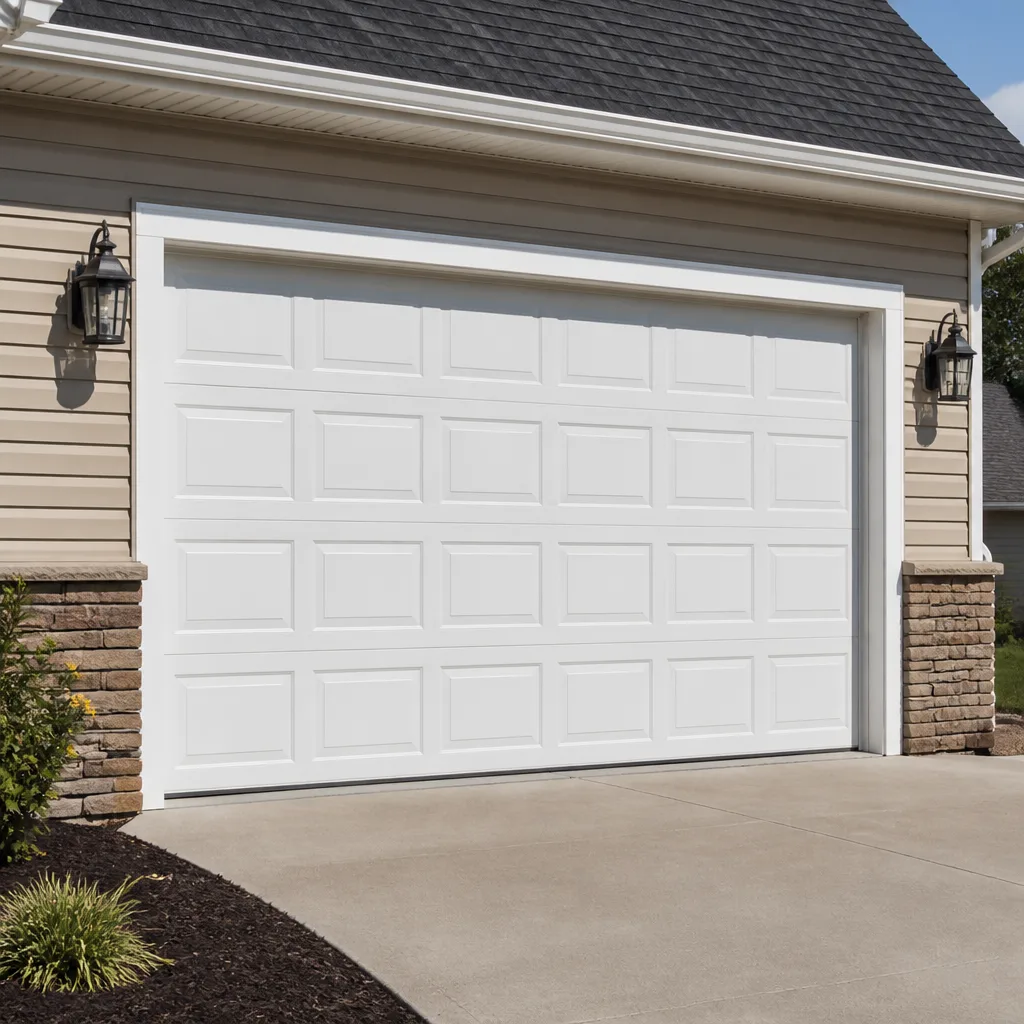
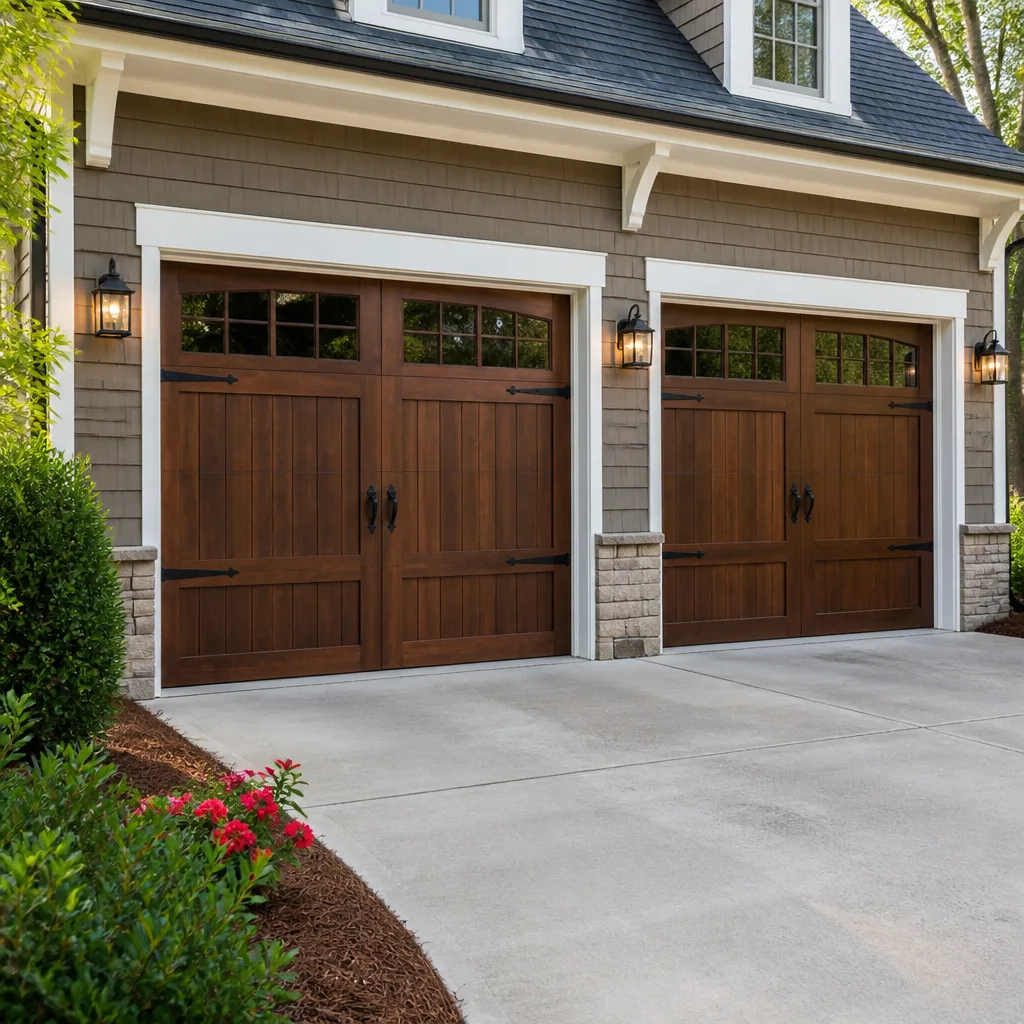
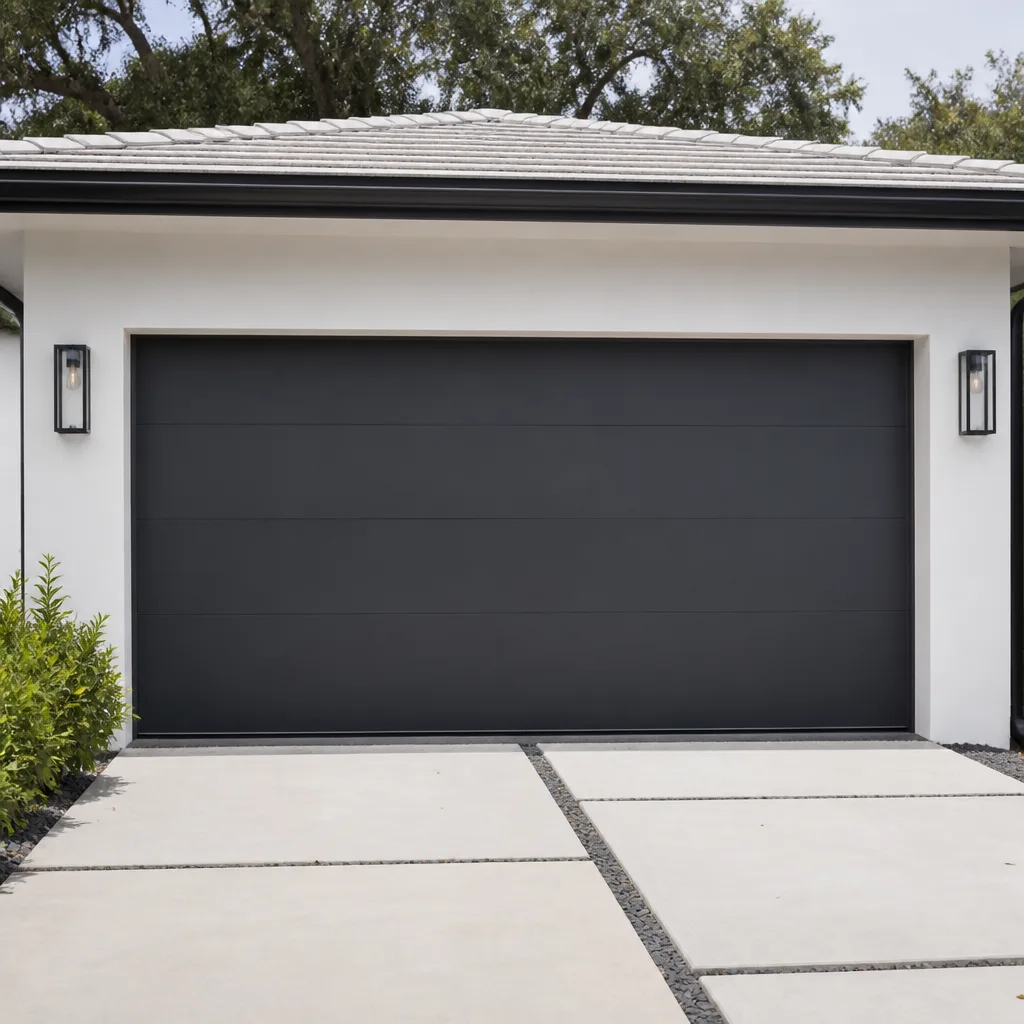
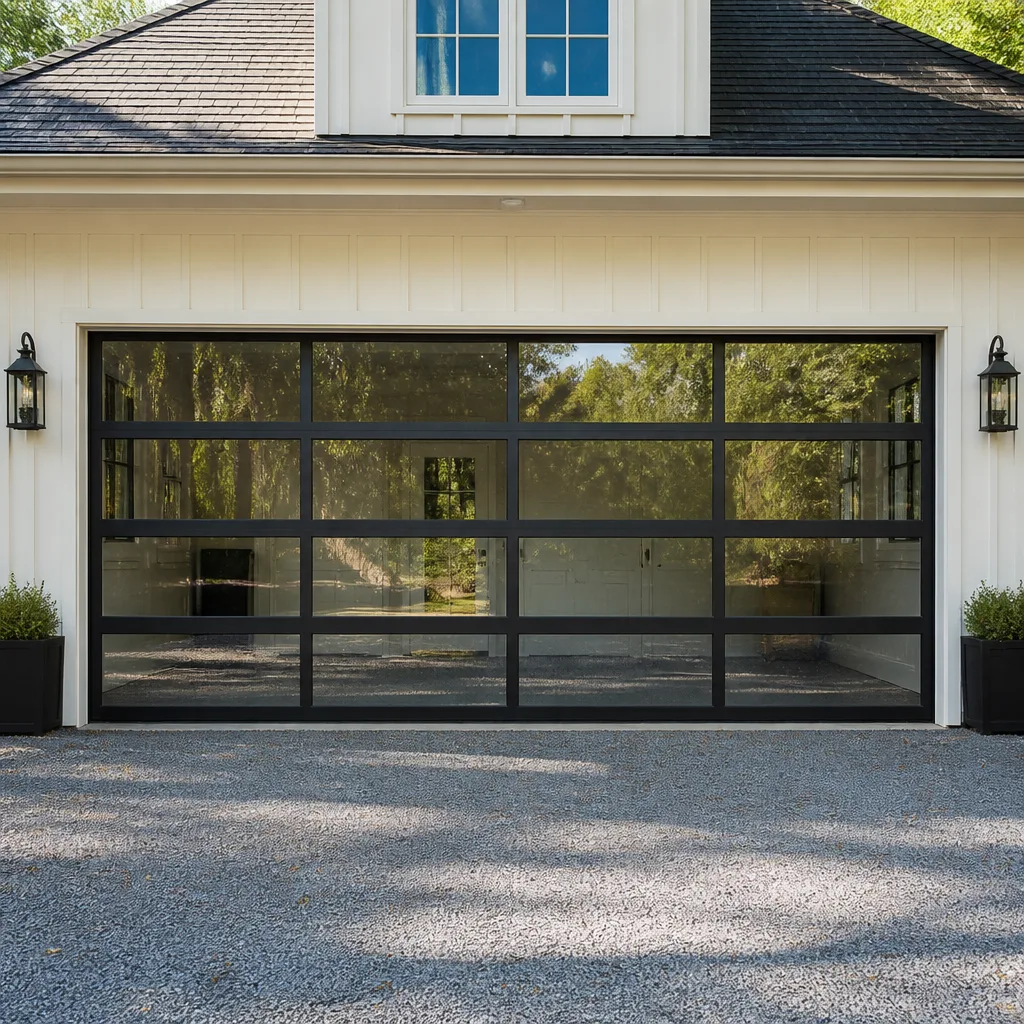
 Before
 After
After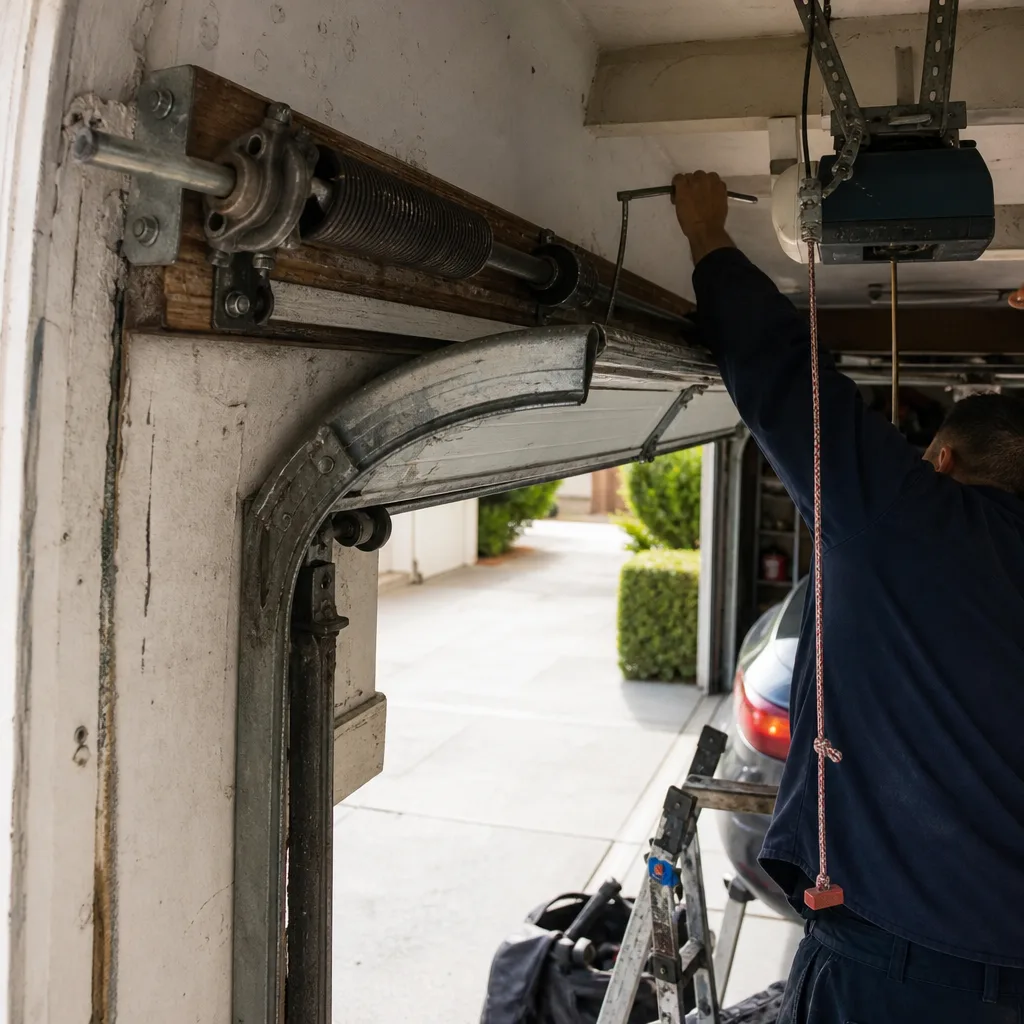 Before
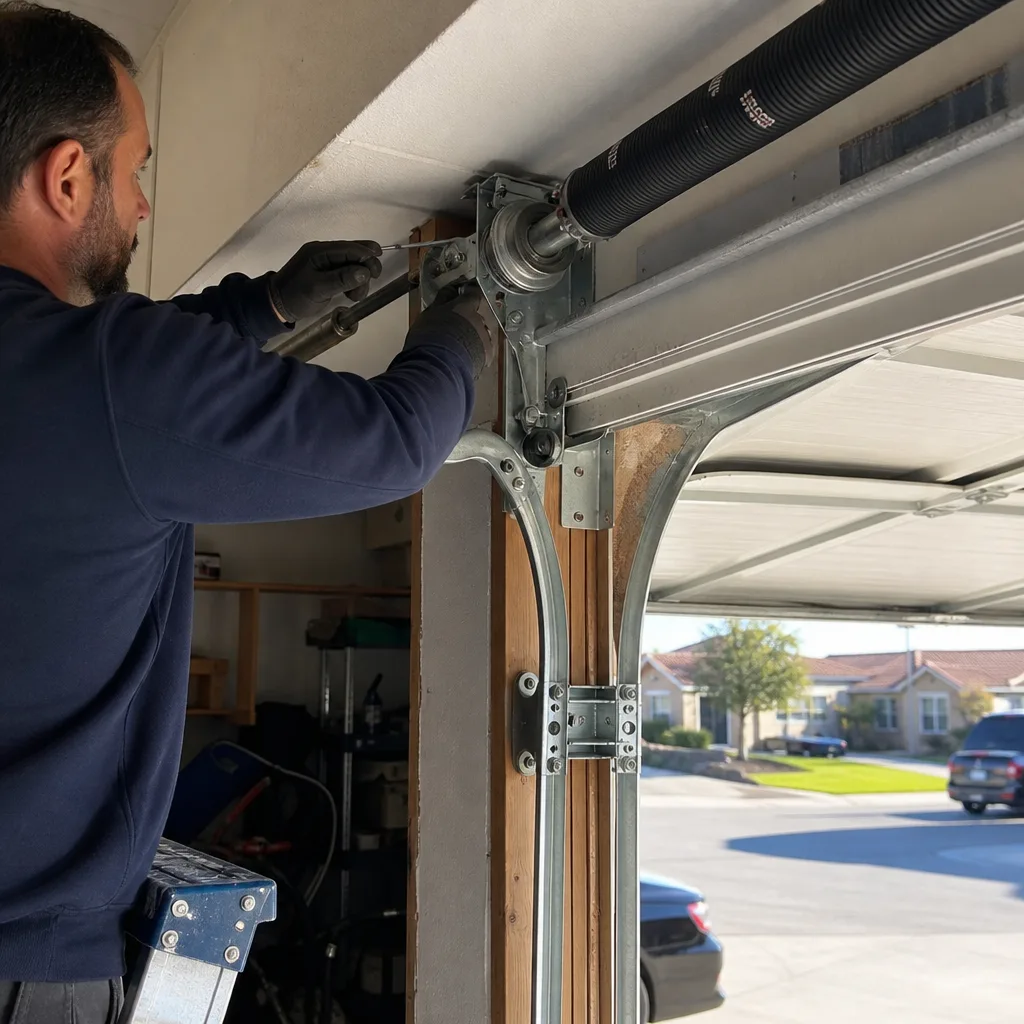 After
After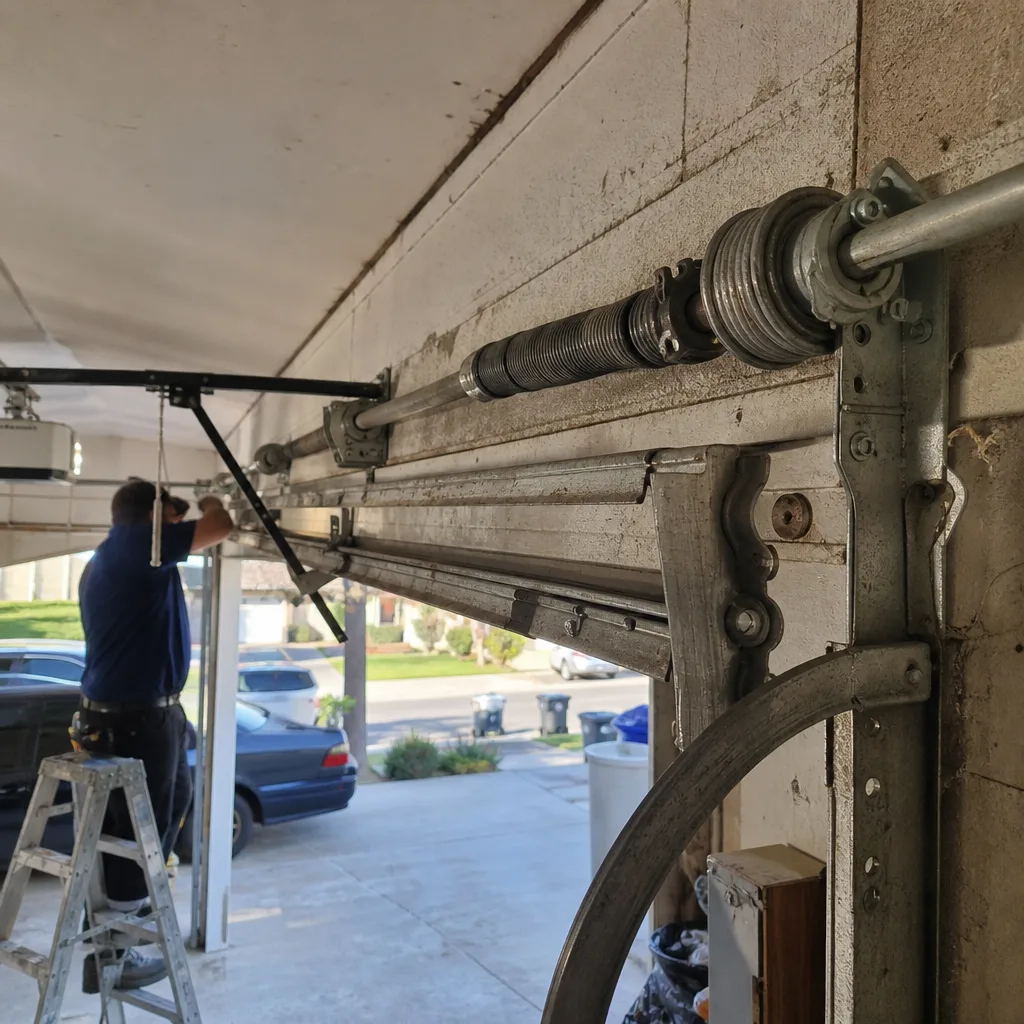 Before
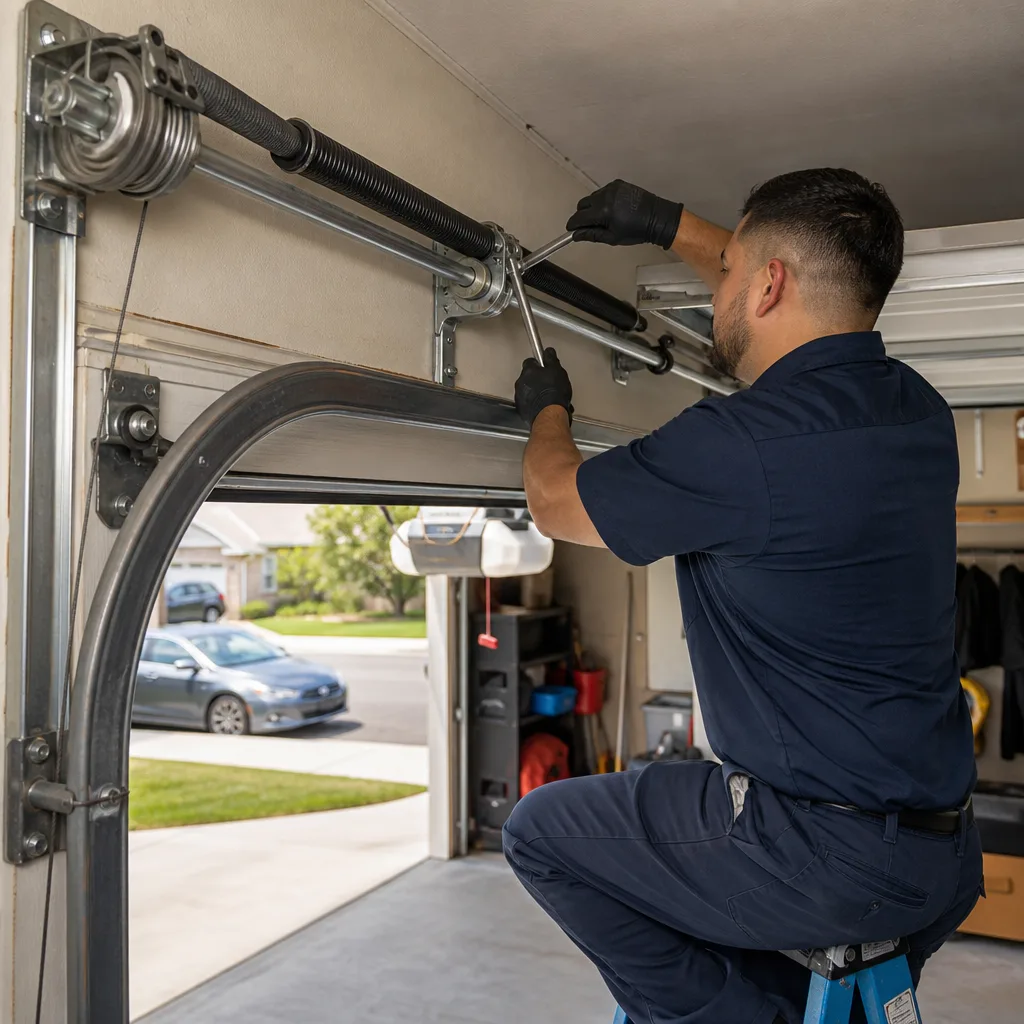 After
AfterThe Complete Guide to Garage Door in Chula Vista
Chula Vista sits within two miles of salt-laden marine layer for roughly 200 days a year, yet most garage door guides still recommend bare steel as the default. That mismatch is why so many doors in this zip code rust from the bottom panel up within a decade. This guide maps every decision - material, insulation, opener, hardware - to Chula Vista’s actual conditions, and you can find more guides & resources on our blog. You’ll learn which panels survive our coastal air, how HOA rules in Otay Ranch and EastLake affect your choices, what R-value actually makes sense here, and when to repair versus replace. We wrote this for homeowners who plan to stay in their house and want to buy once, buy right.
Quick Answer
A garage door in Chula Vista should be galvanized steel or aluminum to resist salt-air corrosion, carry an R-value between 6 and 9 for our mild climate, and comply with your HOA’s architectural guidelines before ordering. Most homeowners in Chula Vista replace rather than repair after 15-20 years, though spring and opener failures are typically worth fixing; see our DIY vs Professional Garage Door: The Chula Vista Homeowner’s Decision Guide for help deciding. Expect to pay $1,200-$3,800 for a standard replacement door installed, with premium insulated aluminum or custom carriage-house styles running higher.
Table of Contents
- How Chula Vista’s Coastal Climate Affects Your Garage Door
- Choosing the Right Material: Steel, Aluminum, Wood, or Composite
- Insulation and R-Value: What Makes Sense Here
- Navigating HOA Rules in Chula Vista Communities
- Selecting a Garage Door Opener for Coastal Conditions
- Stucco Framing and Header Clearance in San Diego County
- Repair, Replace, or New Construction: A Decision Tree
- What a Garage Door Costs in Chula Vista
How Chula Vista’s Coastal Climate Affects Your Garage Door
The marine layer rolls off San Diego Bay and blankets western Chula Vista most mornings from May through October. That fog carries dissolved salt. It settles on bare metal. It creeps into unsealed joints. And it destroys garage doors from the bottom up because salt-laden moisture pools at the threshold where drainage is poorest.
In our 42 years serving this market, we’ve watched standard steel doors in Chula Vista neighborhoods like Terra Nova and the Bayfront corrode through their bottom panels in 8-12 years. The same gauge steel inland in El Cajon or La Mesa routinely lasts 20. The difference is not the steel. It’s the air.
Here’s what the salt does specifically:
- Panel rust: Unprotected steel develops pitting that starts cosmetic, becomes structural. Once a panel rusts through, replacement sections are rarely available in matching color.
- Spring corrosion: Torsion springs live above the door in humid, poorly ventilated space. Surface rust increases friction, shortens cycle life, and raises failure risk.
- Track degradation: Galvanized track resists better, but cheap hardware store track with thin zinc coating flakes off where rollers contact it.
- Opener electronics: Circuit boards in non-weather-sealed openers absorb moisture over years, causing intermittent failures that are maddening to diagnose.
The fix is not moving inland. The fix is specifying materials for the environment you actually live in. In Chula Vista, that means galvanized or aluminum panels rated for coastal exposure, stainless or coated hardware, and openers with sealed housings. We see too many homeowners pay for a “standard” door that was designed for Phoenix or Dallas.
One more factor: our mild temperatures mean thermal expansion and contraction stress is minimal compared to desert climates. That is good news for seal longevity and opener belt life. But it also means the door spends more time in the temperature range where condensation forms - that dew point cycle, not heat, drives most of the corrosion we repair.
Choosing the Right Material: Steel, Aluminum, Wood, or Composite
Four materials dominate the Chula Vista market. Each has a profile that matches specific neighborhoods, budgets, and exposure conditions.
Galvanized Steel
This is our most common specification for Chula Vista homes. Not bare steel - galvanized, with a G60 or G90 zinc coating, and preferably with a baked-on polyester or fluoropolymer topcoat. A 24- or 25-gauge door with proper coating lasts 18-25 years here. The 27-gauge economy doors sold at big-box stores? We’ve replaced them at 10 years in coastal Chula Vista.
Steel handles the occasional Santa Ana wind gust without drama. It dents rather than cracks if a kid hits it with a bike. And it accepts insulation well. The downside is weight: a 16×7 insulated steel door runs 150-180 pounds, which demands a properly specified opener and spring system.
Aluminum
For homes within a mile of the bay, or anywhere with direct salt spray exposure, aluminum is worth the premium. It does not rust. It weighs roughly 40% less than steel, which reduces wear on openers and springs. Modern aluminum doors with extruded frames and composite cores eliminate the “tin can” feel of older designs.
The tradeoff is cost: aluminum typically runs 30-50% above comparable steel. And it dents more easily. We specify aluminum most often in Chula Vista’s western neighborhoods - Castle Park, the Bayfront, parts of Otay Ranch West - and for custom wide doors where weight matters.
Wood and Wood Composite
Real wood carriage-house doors look unmistakable. In Chula Vista’s dry summer months, though, unsealed wood checks and splits. The marine layer swells it. That expansion-contraction cycle destroys joinery. If you want wood aesthetics, we recommend insulated steel or aluminum with woodgrain overlay, or high-density composite that holds paint and resists moisture.
We do install real wood doors in Chula Vista, but only with explicit maintenance agreements: annual resealing, hardware inspection, and prompt repair of any finish breach. Most homeowners who plan to stay 20 years choose composite instead.
Fiberglass and Vinyl
Fiberglass resists salt but becomes brittle with UV exposure. Vinyl is rare in our market and limited in style options. We mention them because competitors sell them; we rarely do. For Chula Vista, galvanized steel or aluminum covers 90% of applications correctly.
Insulation and R-Value: What Makes Sense Here
Here’s a number that surprises most Chula Vista homeowners: our average annual temperature range is 55-72°F. We have perhaps 15 days below 40°F and 10 days above 85°F. That climate profile means extreme insulation is largely wasted money.
R-value measures thermal resistance. A higher number means better insulation. In Minneapolis, R-18 makes sense. In Chula Vista, R-6 to R-9 is the rational range for most attached garages. Here’s why:
- Diminishing returns: Jumping from R-6 to R-12 might save $8-$15 annually in heating/cooling load for a typical attached garage. The payback period exceeds door lifespan.
- Comfort, not efficiency: The real benefit of insulated doors in Chula Vista is noise reduction and a more stable garage temperature for storage or workshop use. R-6 polyurethane core achieves this.
- Over-insulation traps moisture: Highly insulated doors with poor vapor barriers can create condensation on the interior skin during marine layer events, accelerating hardware corrosion.
We specify doors with polystyrene or polyurethane cores for most Chula Vista installations. Polyurethane is denser, bonds to the steel skin for rigidity, and provides R-6 to R-9 in a standard 2-inch thickness. Polystyrene is adequate for detached garages used only for parking.
One exception: if your garage is under conditioned living space and the ceiling is uninsulated, a higher-R door can reduce heat transfer to rooms above. We assess this during our free measure. But for typical single-story Chula Vista ranch or split-level, R-6 to R-9 is the square deal.
Navigating HOA Rules in Chula Vista Communities
Chula Vista has one of the higher HOA densities in San Diego County. Otay Ranch, EastLake, Rolling Hills Ranch, Rancho Del Rey, and numerous smaller PUDs enforce architectural standards that can reject your door after installation if you failed to pre-approve it. We’ve been called to remove legally purchased doors that violated CC&Rs. The homeowner paid twice.
Before you order any door in a governed community, verify these five items:
- Color palette: Most Chula Vista HOAs maintain approved color lists, often referencing Dunn-Edwards or Sherwin-Williams codes. “White” is rarely just white - it is a specific shade.
- Panel profile: Raised panel, recessed panel, flush, or carriage-house. Some associations prohibit designs they consider “too ornate” or “too modern” for the neighborhood character.
- Window placement and style: Arched windows, square windows, no windows - this is the most common rejection point. Many Otay Ranch associations require windows only in the top section, with specific grid patterns.
- Material restrictions: Some associations mandate wood-look or prohibit certain metals. Others require specific hardware finishes.
- Pre-approval process: Submit manufacturer cut sheets, color samples, and photos of installed examples. Allow 2-4 weeks for architectural committee review.
We maintain files of approved specifications for major Chula Vista communities and can often tell you on the first call what your HOA requires. But the final authority is your association’s published guidelines. We build pre-approval into our timeline for every HOA installation. No surprises on the bill, and no surprises from the board.
Selecting a Garage Door Opener for Coastal Conditions
The opener works harder than the door. It cycles 1,500-2,500 times yearly in a typical Chula Vista household. In our coastal environment, electronics and drive systems face moisture, salt, and temperature stability that inland guides ignore.
We install and service all major brands: LiftMaster, Chamberlain, Genie, and others. Our factory familiarity means we can match opener to door, usage pattern, and environmental exposure. Here’s what matters specifically in Chula Vista:
Drive Type
Belt drive: Quietest option. Ideal for bedrooms above or adjacent to the garage. The reinforced rubber belt resists corrosion and does not require lubrication. We specify belt drive for most Chula Vista installations.
Chain drive: Lower cost, longer proven history, but requires periodic lubrication that attracts salt-laden dust. In coastal garages, we’ve seen chains develop surface rust that increases noise and wear. Acceptable for detached garages, less ideal for attached.
Screw drive: Once common, now rare. The threaded rod requires specific lubricant and is sensitive to temperature variation. We do not recommend for our climate.
Direct drive (jackshaft): Mounts beside the door, freeing ceiling space. Excellent for high-lift or limited-headroom applications. The motor travels along a stationary chain, reducing moving parts. Premium option, worth considering for custom installations.
Motor Power and Features
A 1/2-horsepower motor handles most residential doors up to 16 feet wide. For insulated steel or solid wood doors, or for high-cycle use, we specify 3/4 HP. Battery backup is now California code for new installations - it keeps your door operable during PSPS events or grid failures.
Smart connectivity is standard on mid-tier and above openers from LiftMaster and Chamberlain. We find Chula Vista homeowners use it less than marketing suggests, but the vacation lockout and delivery access features do get used. We configure them during installation if requested.
Critical for coastal conditions: sealed logic boards and corrosion-resistant hardware. The opener mounted in a garage 200 days of marine layer per year needs better environmental protection than one in Rancho Cucamonga. We verify this on every spec.
Stucco Framing and Header Clearance in San Diego County
Chula Vista’s housing stock is predominantly stucco-over-frame construction, built from the 1970s through present day. That construction method creates specific constraints for garage door installation that homeowners from other regions do not anticipate.
The header - the horizontal structural member above the door opening - in San Diego County tract homes is often a double 2×10 or engineered LVL with minimal margin. Standard garage door track requires 12-15 inches of headroom above the opening for the radius curve. Many Chula Vista garages, especially 1980s and 1990s construction in areas like Bonita Long Canyon or Telegraph Canyon, were built with 8-10 inches.
Low-headroom track systems solve this. They use a dual-track configuration that tightens the radius. We stock these systems because we encounter the condition regularly. But they cost more, and they must be specified before the door is ordered. A standard track forced into inadequate headroom binds, wears rollers prematurely, and eventually fails.
Stucco returns - the plaster that wraps the door opening - also affect installation. Cutting stucco to widen an opening is messy, risks water intrusion if not properly sealed, and often reveals inadequate structural support that must be addressed. We measure the actual rough opening, not the visible door size, because the two differ by 1-2 inches in many Chula Vista homes.
For opener mounting, stucco ceilings require proper anchoring into trusses or joists, not just the lath. A 30-pound opener hanging from compromised stucco eventually pulls free. We find the structure, use appropriate fasteners, and patch cleanly. The work is invisible when done right. It is catastrophic when guessed.
Repair, Replace, or New Construction: A Decision Tree
Not every garage door problem demands a new door. Not every aging door is worth repairing. Here’s how we guide Chula Vista homeowners through the decision.
Repair When:
- The door is under 15 years old and the panels are structurally sound
- The failure is isolated: broken spring, failed opener, frayed cable, misaligned track
- The door matches HOA requirements and you have no compliance issues
- The cost of repair is under 30% of replacement cost
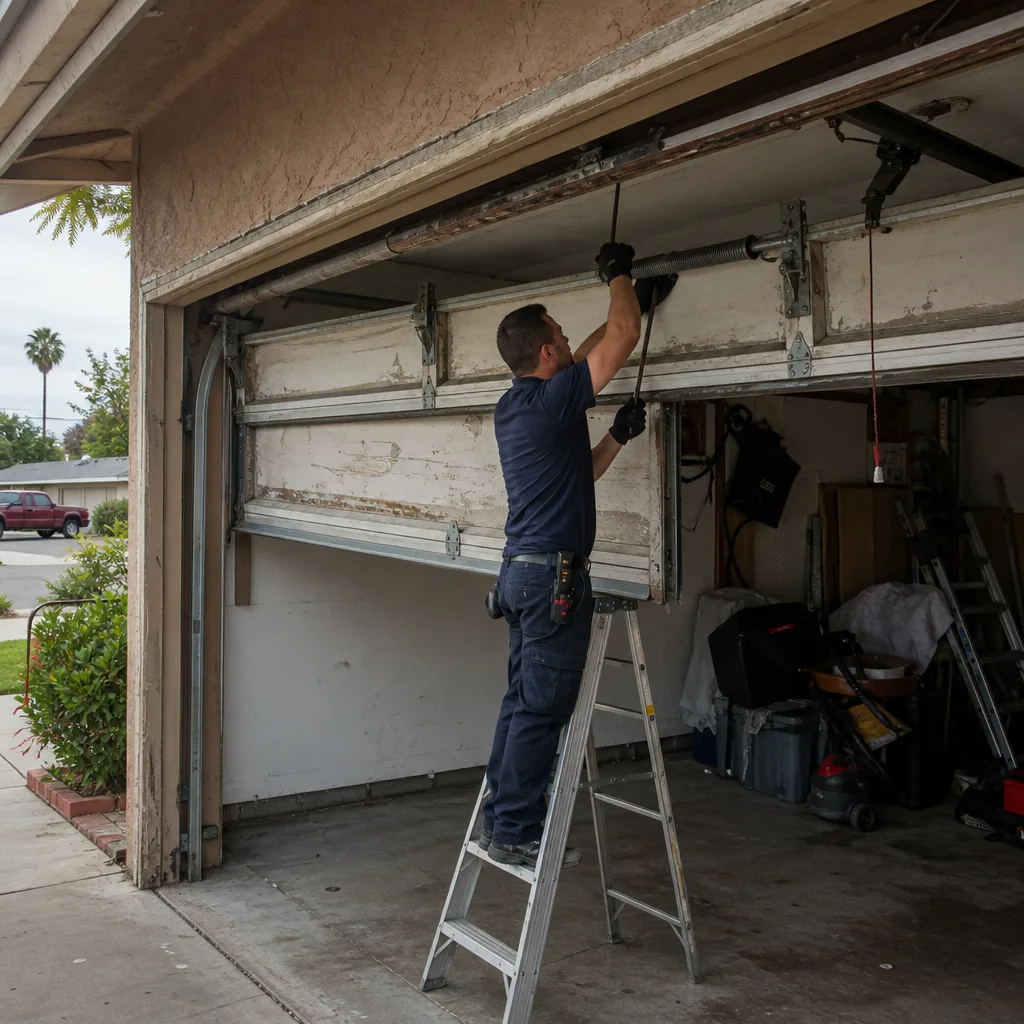
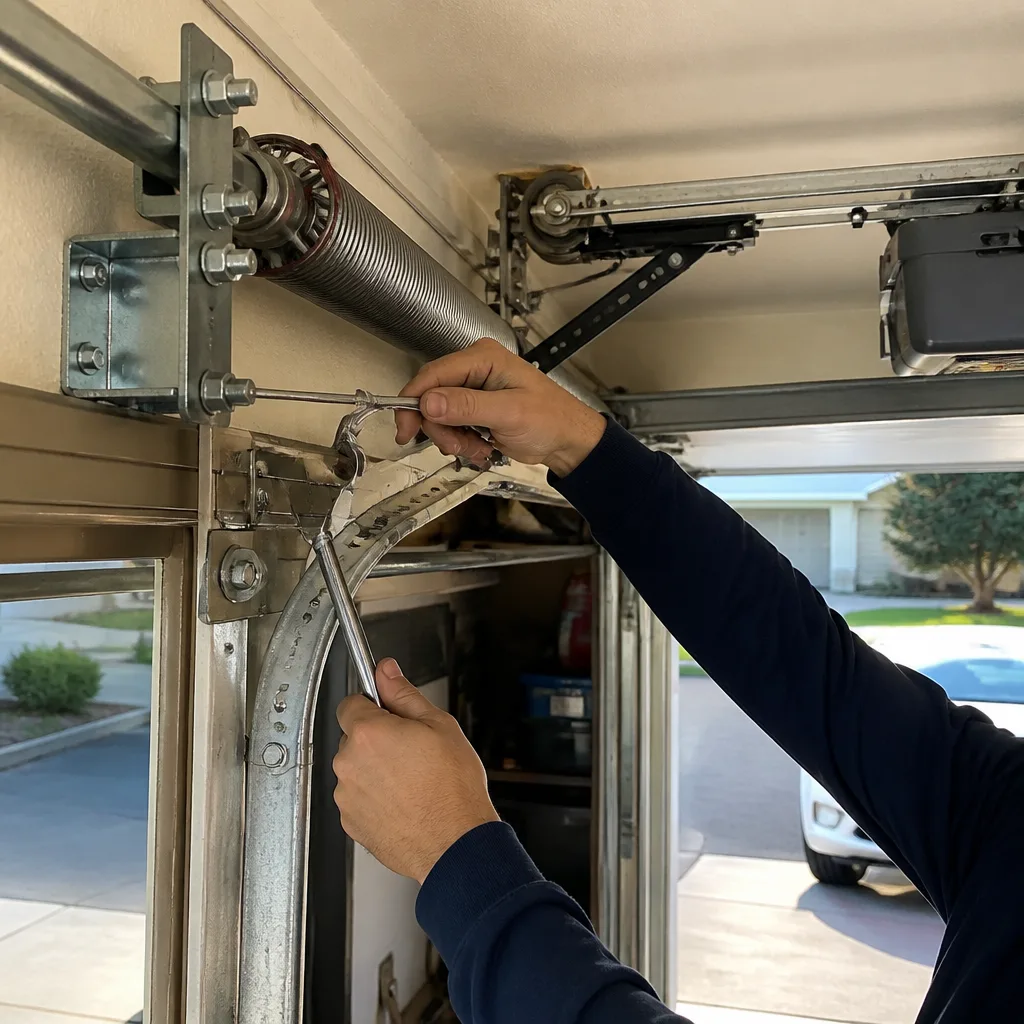
Spring replacement is the most common repair we perform in Chula Vista. A standard torsion spring has a 10,000-cycle life - roughly 7-10 years of normal use. We replace both springs simultaneously because they age in parallel. Our trucks carry the full range of spring wire sizes, so most garage door repair in Chula Vista is completed in a single visit.
Replace When:
- The door exceeds 20 years old and shows multiple failure modes
- Panels are rusted, dented, or delaminated beyond cosmetic repair
- The door predates current safety standards (pre-1993 openers lack auto-reverse)
- Energy costs or noise complaints motivate upgrade
- HOA compliance requires style or color change
Replacement is also the opportunity to correct sizing, insulation, and hardware specification for your actual conditions. We measure, specify, and install - garage door installation in Chula Vista with the right door for this climate.
New Construction:
Building a garage or ADU in Chula Vista? Specify the door during framing, not after. Header height, side room, and electrical rough-in for the opener all depend on door selection. We consult with builders and homeowners during construction to avoid expensive rework. The $200 saved by deferring door specification often costs $2,000 in structural modification later.
What a Garage Door Costs in Chula Vista
Price is the question we answer most often, and the answer depends on material, size, insulation, hardware, and installation complexity; our Garage Door Cost Breakdown: The Chula Vista Homeowner’s Reference for 2026 breaks this down in detail. Here are the ranges we quote in Chula Vista for standard 16×7 two-car and 9×7 single-car doors, installed, with opener and haul-away included where noted:
| Door Type | Single Car (9×7) | Two Car (16×7) |
|---|---|---|
| Non-insulated steel, basic hardware | $850-$1,200 | $1,200-$1,700 |
| Insulated steel (R-6 to R-9), standard track | $1,100-$1,600 | $1,600-$2,400 |
| Premium insulated steel or aluminum, upgraded hardware | $1,600-$2,400 | $2,400-$3,800 |
| Custom carriage-house or wood-look composite | $2,200-$3,500 | $3,500-$5,500 |
| Opener only (installed, belt drive, 1/2-3/4 HP) | $450-$850 | |
| Spring replacement (pair, standard torsion) | $180-$340 | |
These are installed prices with our standard hardware package. Low-headroom track, custom glass, wind-rated doors for canyon-exposed properties, and smart opener accessories add cost. We state the flat price before any work begins. No surprises on the bill.
Our standing offers apply: $50 off any repair over $250, $89 seasonal tune-up, and a permanent 5% discount for seniors and veterans. We also provide free second opinions on any written estimate from another company. The price we quote is the price you pay.
Common Mistakes to Avoid
- Ordering bare steel for coastal exposure: The upfront savings disappear when panels rust through in 8-10 years. Specify galvanized or aluminum for Chula Vista’s marine layer.
- Skipping HOA pre-approval: We’ve removed and replaced doors that cost homeowners double. Submit your selection to the architectural committee before ordering.
- Over-insulating for the climate: R-12 or higher in Chula Vista rarely pays back. R-6 to R-9 handles our mild range without trapping moisture.
- Ignoring headroom constraints: Assuming standard track fits without measuring actual rough opening leads to binding, premature wear, and eventual failure.
- DIY spring replacement: Torsion springs store lethal energy. We do not provide step-by-step instructions because the risk of serious injury or death is real. This is trained technician work.
- Buying on brand name alone: LiftMaster, Chamberlain, and Genie all make excellent openers and mediocre ones. The model and features matter more than the logo. We match specification to application.
- Deferring maintenance until failure: A $89 seasonal tune-up identifies worn cables, misaligned safety sensors, and opener strain before they become $400 emergency calls.
When to Call a Professional
Call when the door makes new noises, reverses unexpectedly, hangs crooked, or fails to open. Call when springs break, cables fray, or openers hum without moving the door. Call before you order a replacement door, because measurement and specification errors are expensive to correct.
And call before attempting any repair involving the spring system or high-tension cables. These components carry enough stored energy to cause severe injury or death. A visual inspection of rollers, weatherstrip, and exterior condition is safe homeowner maintenance. Anything involving the counterbalance system is not.
Mainspring Garage Door Co. offers free estimates in Chula Vista. We’ll measure your opening, assess your existing hardware, check HOA requirements if applicable, and provide a written quote with no obligation. Call (619) 901-2874. A live person answers, 24/7, including nights, weekends, and holidays.
Frequently Asked Questions
A properly specified and maintained garage door lasts 18-25 years in Chula Vista’s coastal climate. Bare steel doors often fail in 8-12 years due to salt-air corrosion. Galvanized steel or aluminum with proper coating achieves the longer span. Call (619) 901-2874 for a free condition assessment.
R-6 to R-9 is optimal for Chula Vista’s mild climate. Higher R-values provide minimal energy savings here and can trap moisture against the interior panel during marine layer events. We specify polyurethane-core doors in this range for most local installations.
Yes, if the door is in good condition and properly balanced. A new opener cannot compensate for a door with failing springs or damaged track. We assess the full system before recommending opener-only replacement. Garage door opener in Chula Vista installations include safety check of the entire door system.
If you live in a governed community such as Otay Ranch, EastLake, Rolling Hills Ranch, or Rancho Del Rey, yes. Most Chula Vista HOAs require pre-approval of color, style, window configuration, and sometimes hardware finish. We maintain specification files for major local associations and build pre-approval into our process.
Salt-laden moisture from Chula Vista’s marine layer pools at the threshold where drainage is poorest. Road salt and landscape irrigation compound the effect. The bottom panel sits in this environment constantly. Galvanized or aluminum panels resist this; bare steel succumbs to it. We see this pattern most in western Chula Vista neighborhoods within a mile of the bay.
Spring replacement typically runs $180-$340. Opener repairs range $150-$400 depending on component. Cable and roller replacement is usually $120-$250. We state the flat price before any work begins, and our $50-off repair over $250 offer applies. Estimates are free - call (619) 901-2874.
No. The price we quote is the price you pay. We inspect, diagnose, and quote before any work begins. If we discover additional issues during repair, we stop and discuss options with you. No surprises on the bill is how we’ve operated since 1984.
The Bottom Line
A garage door in Chula Vista faces specific challenges that generic advice misses: salt-air corrosion from 200 days of marine layer, HOA architectural controls in master-planned communities, stucco framing constraints, and a mild climate where over-insulation wastes money. The right door is galvanized steel or aluminum, R-6 to R-9, pre-approved by your association if required, and specified by someone who measures your actual rough opening. Repair isolated failures on younger doors. Replace when age, rust, or multiple problems make continued service uneconomical. And never compromise on safety: the spring system stores lethal energy and demands trained handling.
We’ve served Chula Vista since 2016, backed by 42 years of company history. Our trucks carry the parts to finish most jobs in one visit. Our 90-Day Done Right Promise covers every job in writing. And a live person answers the phone at (619) 901-2874, 24 hours a day.
Written by Carl Dutton, Owner at Mainspring Garage Door Co., serving Chula Vista since 2016.